History, styles, cost, how-to, and care — everything about Fulani braids in one place, written by a licensed braiding specialist.
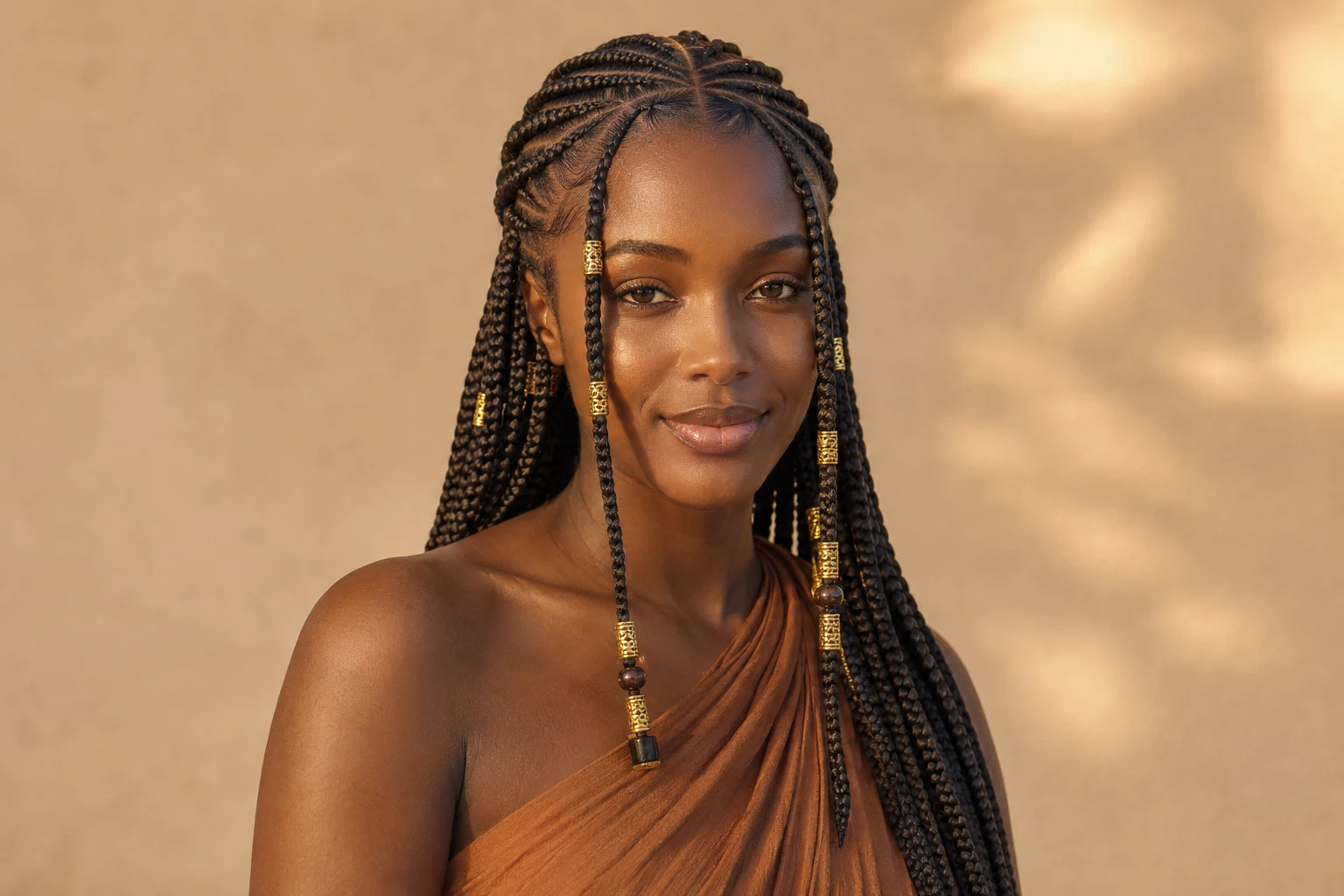
Fulani braids take their name from the Fulani people, a primarily pastoral ethnic group spread across West Africa and the Sahel region. Historically, the braid pattern was never just decorative — the placement, number of braids, and choice of beads or cowrie shells could signal a woman's age, marital status, and family wealth within the community.
The signature center cornrow and face-framing braids have stayed largely unchanged for generations, even as modern stylists add curls, color, and beadwork to reinterpret the look. Read the full history →
From classic tribal patterns to the boho-curl trend dominating 2026.
Soft curls woven through for a romantic, less-structured finish.
Read the guide →Starts with your natural hair for a flatter base and less scalp strain.
Read the guide →The traditional finish — cowrie shells, cuffs, and wooden beads.
Read the guide →Soft curl texture at the tips for a trendy, sun-kissed finish.
Read the guide →Thicker sections for a statement look and shorter install time.
Read the guide →All the drama of Fulani patterns gathered into a sleek ponytail.
Read the guide →Not sure which protective style is right for you? See how Fulani braids stack up.
Independent informational website — not affiliated with any salon or brand. | Disclaimer | Privacy Policy | Contact | About