
Real price ranges by city, size, and style — plus tipping norms and the hidden costs most people forget to budget for.
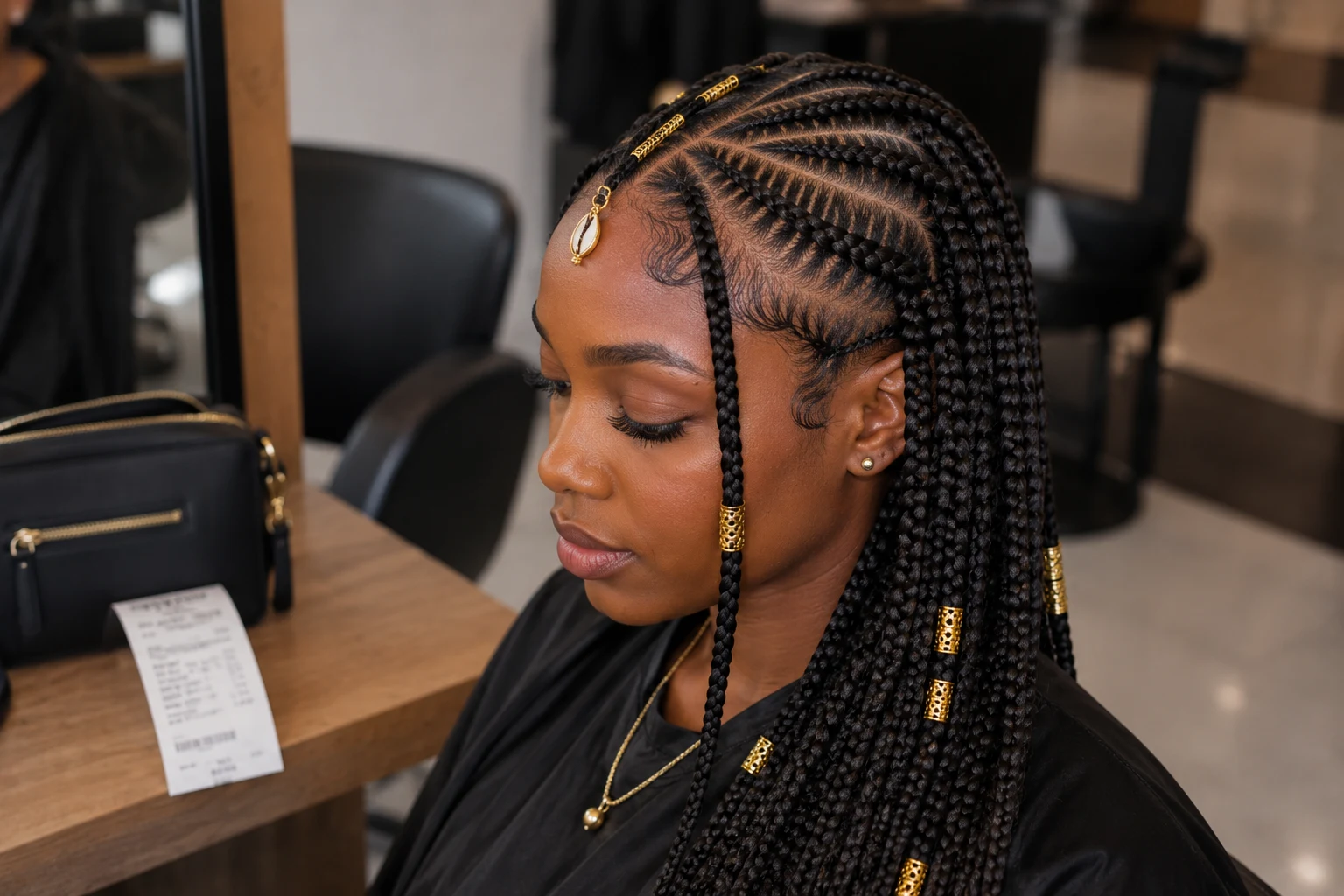
Most people pay between $100 and $350 for a full set of Fulani braids, though prices in major cities or with highly experienced stylists can climb to $450 or more, especially for waist-length styles or intricate bead work. On the lower end, smaller local salons and independent braiders in non-major cities often charge closer to $120–$220 for a standard mid-back length style.
The price isn't random — it reflects the time investment. A full Fulani install genuinely takes 2 to 5 hours of detailed, skilled work, which is why the cost sits noticeably higher than a basic straight-back cornrow style.
Location is one of the biggest price drivers. Here's how costs typically compare across major U.S. cities:
| City | Typical Range |
|---|---|
| New York City | $200 – $450+ |
| Los Angeles | $180 – $400 |
| Chicago | $150 – $300 |
| Houston / Charlotte | $120 – $250 |
| Smaller cities/towns | $100 – $200 |
Beyond location, six factors determine where you'll land in the price range:
Smaller or micro braids require far more time and precision, and cost more than medium or jumbo sizes.
Waist-length braids take meaningfully longer to install than shoulder or mid-back length.
Zig-zag parts, heart-shaped cornrows, or layered patterns require more skill and time.
Some stylists include beads in the price; others charge separately or expect you to bring your own.
In-demand, experienced braiders command higher rates than newer stylists building a client base.
Virgin or human-hair extensions cost more than synthetic, and that difference often passes to the client.
Tipping isn't mandatory, but 15 to 20 percent is the widely accepted standard in the braiding industry, treated the same as any other salon service. On a $250 install, that works out to roughly $37–$50. Braiders are often independent or booth-renting stylists who don't take home the full quoted price after supplies and space rental costs, so a tip is genuinely appreciated rather than a formality.
The quoted install price is rarely the full picture. A few additional costs are common but easy to forget when budgeting for Fulani braids.
Most salons require a non-refundable deposit to hold your appointment, deducted from the final total.
If you don't arrive with hair already washed, detangled, and blown out, expect an add-on fee plus extra service time.
A growing trend — paying a stylist to remove, wash, and detangle your braids instead of doing it yourself. See our DIY takedown guide if you'd rather save the cost.
Many braiders charge a fee for arriving more than 15–20 minutes late, since it affects their full-day schedule.
If budget is the main concern, doing your own Fulani braids cuts the cost dramatically — you're paying for supplies only, not labor.
Includes stylist labor, often includes braiding hair, professional finish, typically lasts 4–8 weeks.
Just the cost of braiding hair, beads, and basic supplies. See our step-by-step guide.
Independent informational website — not affiliated with any salon or brand. | Disclaimer | Privacy Policy | Contact