What Is a Fulani Braids Ponytail?
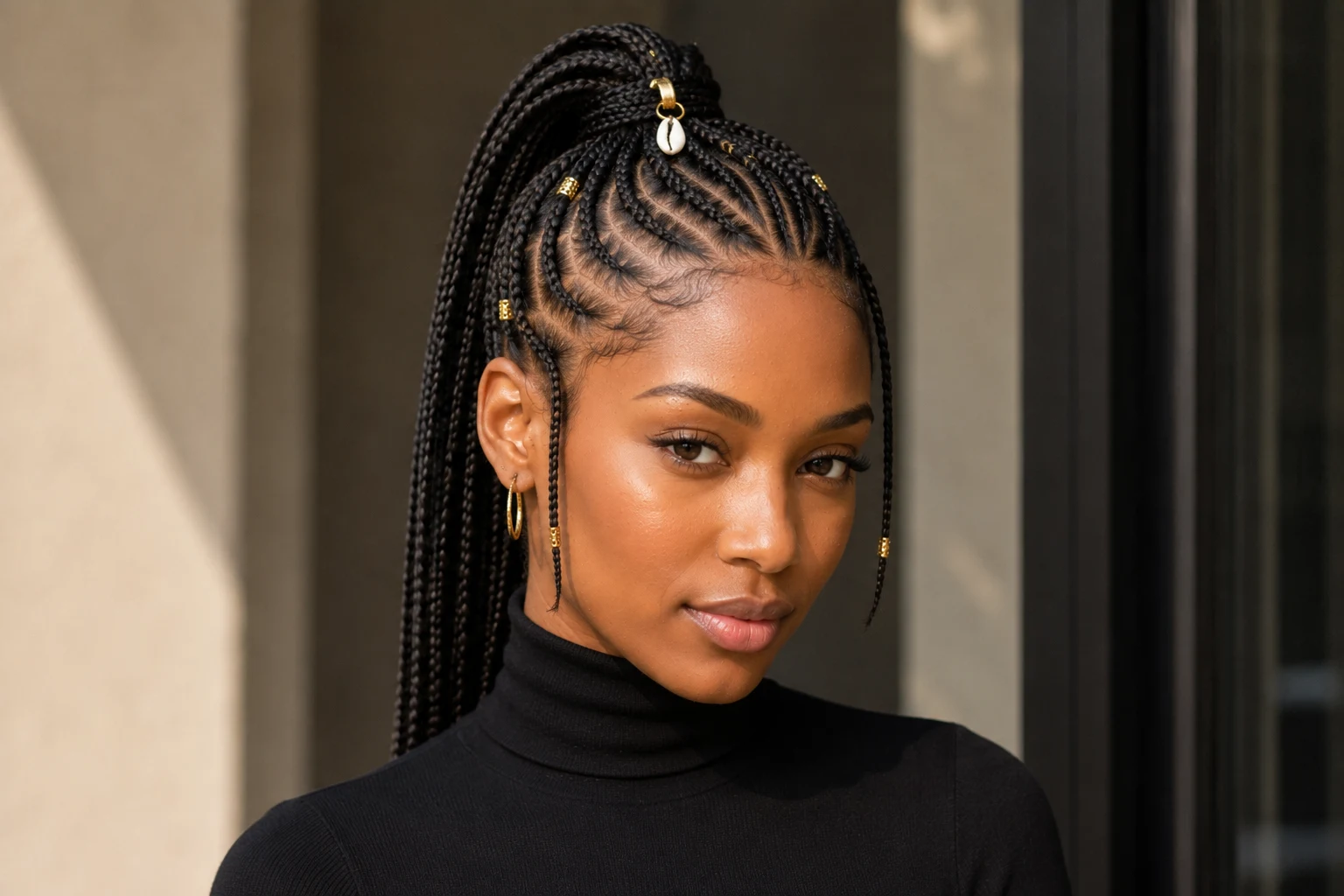
A Fulani braids ponytail takes the center-cornrow and face-framing pattern of classic Fulani braids and gathers all the length into a single ponytail — high at the crown or low at the nape. The face-framing braids are usually left loose or slightly pinned to preserve the defining detail of the Fulani pattern, while the remaining length is gathered and secured.
What makes the Fulani braids ponytail distinctive compared to a regular braid ponytail is that the front cornrow pattern remains visible — you're not just pulling everything back and hiding the work, you're displaying the front section as the focal point while the gathered length creates the silhouette. This is why the Fulani braids ponytail reads as more polished and intentional than a standard pulled-back style.
Variations of the Fulani Braids Ponytail
High Ponytail
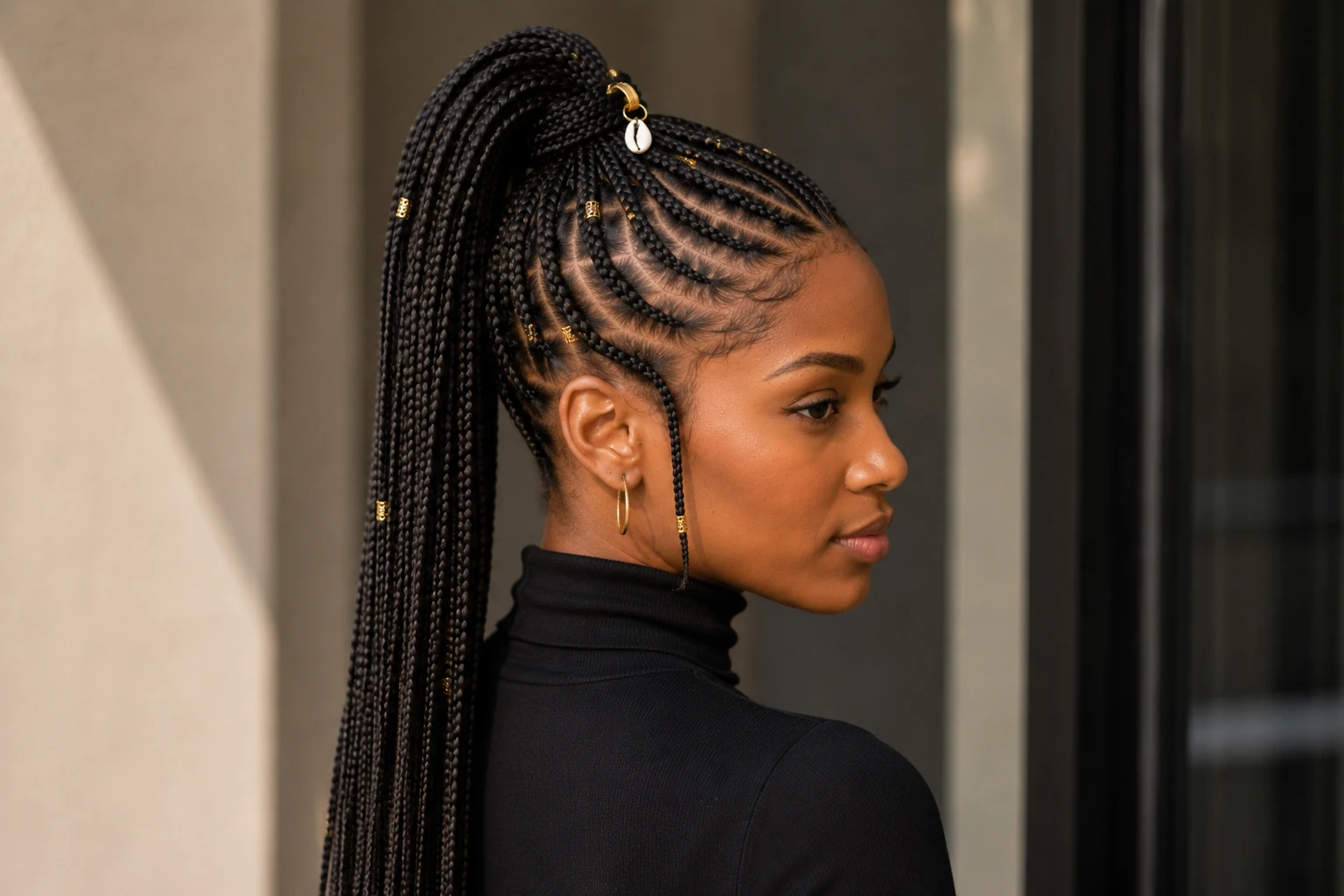
The most dramatic variation — gathering braids at the crown creates height and elongates the neck, making it ideal for formal occasions where you want maximum visual impact from the Fulani braids ponytail.
Low Ponytail
A more relaxed version gathered at the nape — easier to maintain throughout the day and more suitable for everyday wear or workplaces where a very high ponytail might feel too formal.
Sleek High Ponytail
All braids gathered tightly at the crown, edges laid with gel, face-framing braids left loose at the front.
Low Nape Ponytail
Relaxed gathering at the nape — more casual, easier to maintain, still shows the front Fulani pattern.
Half-Up Ponytail
Only the top section gathered, with the remaining braids left loose — see our Half-Up Half-Down guide.
Wrapped Ponytail
A single braid wrapped around the elastic to conceal it, for a more finished, editorial look.
How to Style a Fulani Braids Ponytail at Home
1
Apply Edge Control
Work edge control into the hairline and baby hairs first, before gathering — it's much harder to smooth edges once the ponytail is already secured.
2
Gather the Braids
Use your fingers to gather all braids to your chosen point — high crown or low nape — keeping the face-framing braids slightly loose at the front.
3
Secure with a Fabric Elastic
Use a soft, fabric-covered elastic or a braid wrap rather than a thin rubber band — it holds better and doesn't snag individual braids.
4
Wrap and Finish
Optionally wrap a single braid around the elastic to conceal it, securing the end with a bobby pin or small clear elastic.
Tip: For a Fulani braids ponytail that stays sleek all day, apply a light-hold mousse over the gathered section before securing — it keeps flyaways down without the stiffness of heavy gel.
Best Occasions for a Fulani Braids Ponytail
The Fulani braids ponytail is unusually versatile for a single style, since a small change in height and finish shifts it from a work-appropriate look to a full formal statement.
- Weddings and formal events: A sleek, high ponytail with a wrapped base reads as intentional and polished enough for bridal parties, guests, and other black-tie settings.
- Job interviews and workplace settings: A low, neat nape ponytail keeps the Fulani pattern visible without feeling too dramatic for a professional environment.
- Summer and hot weather: Gathering the length up and off the neck is one of the most practical ways to stay cool while still showing off the braid pattern — see our summer guide for more heat-specific tips.
- Everyday wear: A relaxed low ponytail with minimal edge styling works as a genuinely low-maintenance daily option.
Accessorizing Your Fulani Braids Ponytail
Small additions at the base of the ponytail make a noticeable difference to how finished the style looks.
- Gold cuff at the base: A single decorative cuff slid over the gathering point hides the elastic entirely and adds a polished, editorial touch.
- Wrapped braid: As covered in the how-to above, wrapping one braid around the base achieves the same effect without needing an extra accessory.
- Beads on face-framing sections: Since the ponytail leaves the front pattern visible, cowrie shells or beads on the loose face-framing braids tie the whole look back to classic Fulani styling.
Caring for a Fulani Braids Ponytail
Wearing braids gathered up puts more sustained, concentrated tension on one section of the hairline than wearing them down, so a little extra care protects your scalp over time.
- Loosen before bed: Take the ponytail down or switch to a much looser gather before sleeping — a tight elastic held in the same spot all night, every night, is one of the more common causes of tension-related thinning at the hairline.
- Alternate the gathering point: If you wear your braids in a ponytail often, switch between high and low, or move slightly left or right, rather than pulling from the exact same spot every time.
- Check for tightness: If your scalp feels sore or you notice tension headaches after putting the ponytail up, it's too tight — loosen it rather than pushing through the discomfort.
Frequently Asked Questions
How do you style Fulani braids into a ponytail? +
Gather all braids at the crown or nape and secure with a large fabric elastic or braid wrap. Apply edge control at the hairline before gathering to keep baby hairs smooth and the ponytail looking polished.
Is a Fulani braids ponytail good for formal occasions? +
Yes — a sleek, high Fulani braids ponytail reads as very polished and is appropriate for weddings, proms, job interviews, and other formal settings.
Does putting Fulani braids in a ponytail damage them? +
Using a gentle fabric-covered elastic or braid wrap minimizes damage. Avoid thin rubber bands or metal-clasped elastics that can snag or break individual braids.
Can you do a Fulani braids ponytail on shorter hair? +
Yes — shorter Fulani braids can be gathered into a low ponytail or half-up style. Adding extensions at install gives more length to work with for a higher, fuller ponytail.
Can you sleep in a Fulani braids ponytail? +
It's better to loosen or take it down before bed. Sleeping with a tight, high ponytail overnight puts sustained tension on the same section of hairline and scalp, which can contribute to thinning over time if done repeatedly.
How do you accessorize a Fulani braids ponytail? +
A gold cuff or wrapped braid at the base hides the elastic and adds a finished, editorial look. Cowrie shells or beads on the loose face-framing braids tie the ponytail back into the classic Fulani aesthetic.