Fulani braids for weddings are one of the most elegant protective style choices for brides and guests alike — the style's cultural adornment, structured pattern, and updo versatility make it genuinely bridal.
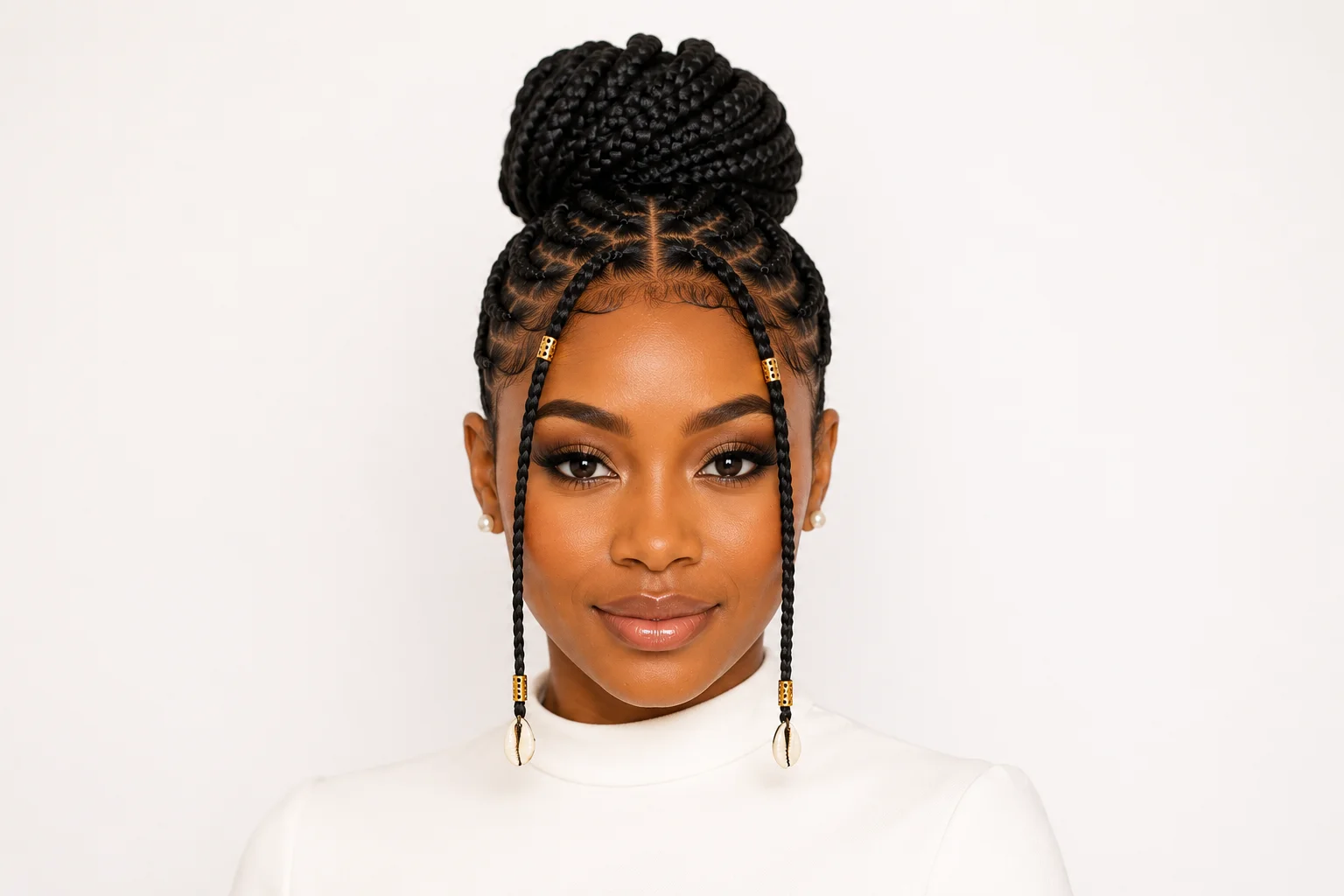
Fulani braids for weddings are an excellent choice for the occasion for reasons that go beyond aesthetics. The style's traditional adornments — gold cuffs, cowrie shells, and pearl beads — translate naturally into a bridal aesthetic without requiring any modification of the core pattern. The Fulani braid structure also supports all the major updo variations that formal occasions demand: a high bun, a sleek ponytail, or a half-up style, all of which keep the face clear and photograph beautifully from every angle.
For brides specifically, fulani braids for weddings offer something most other hairstyles cannot — a style that looks just as intentional and polished in the morning during getting-ready photos as it does at the ceremony and reception. The structure of the Fulani cornrow pattern means the scalp detail is visible and striking from the front even when the rest of the hair is gathered into an updo, which makes it highly photogenic throughout a long wedding day.
For wedding guests, fulani braids for weddings eliminate the morning-of hair stress entirely — the style is already installed and maintained, and styling it for the event takes five to ten minutes rather than the hour or more that non-braided styles require.
All braids coiled into a high crown bun with face-framing braids adorned with gold cuffs and pearl or cowrie shells hanging loose. The most photographed Fulani wedding look. See the bun guide.
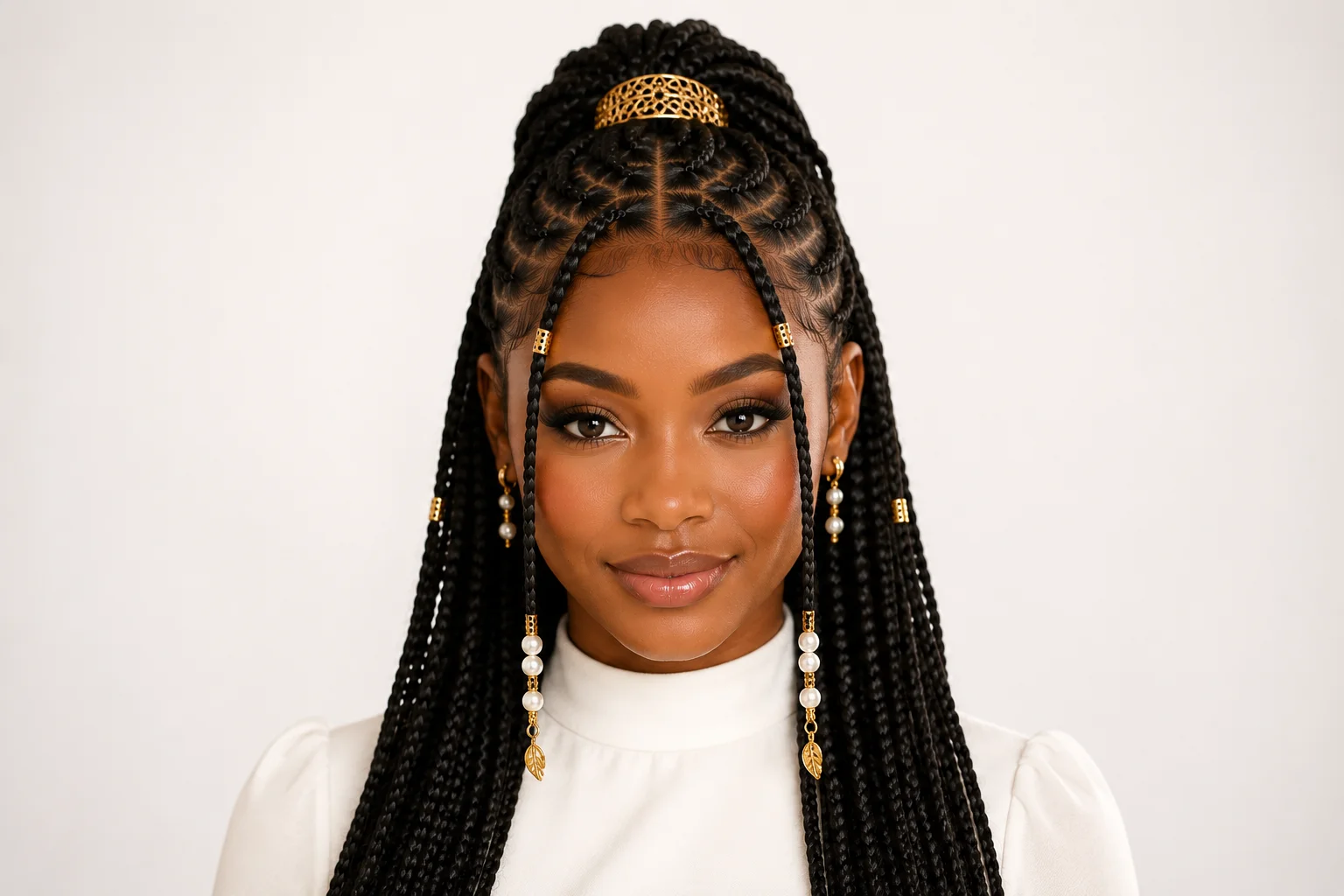
Top section gathered with a decorative gold crown cuff, lower braids flowing freely. Shows off the full length while keeping hair out of the face. See the half-up guide.
All braids gathered at the crown into a sleek ponytail — dramatic and elongating. Works best for non-traditional modern weddings.
Long Fulani braids worn fully down with pearl and gold cuffs — relaxed and romantic, best for outdoor garden or beach weddings.
Two of the most common bridal accessories pair naturally with Fulani braids, though each works a little differently than with loose or unbraided hair.
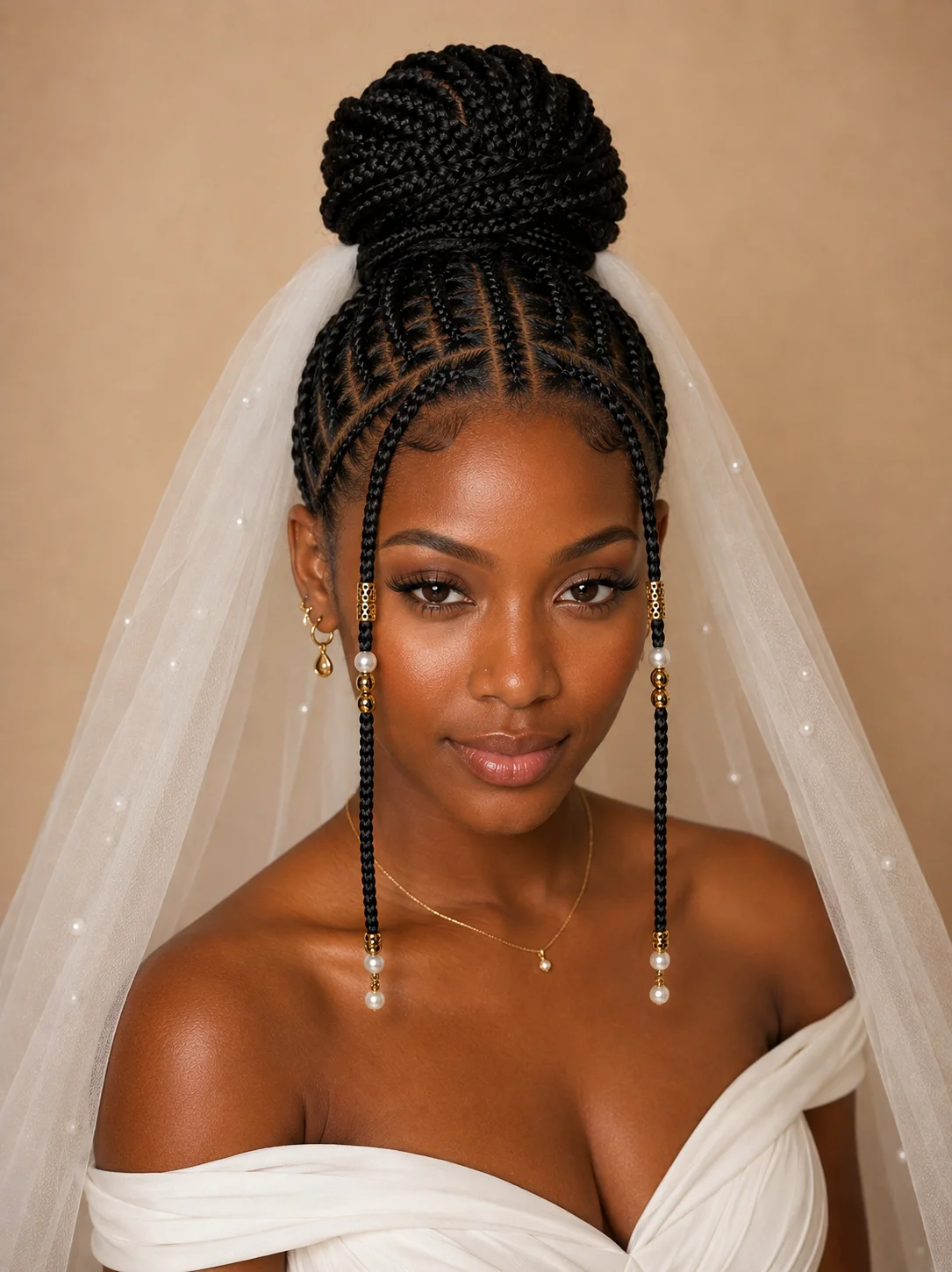 Veil Pinned Into a High Bun
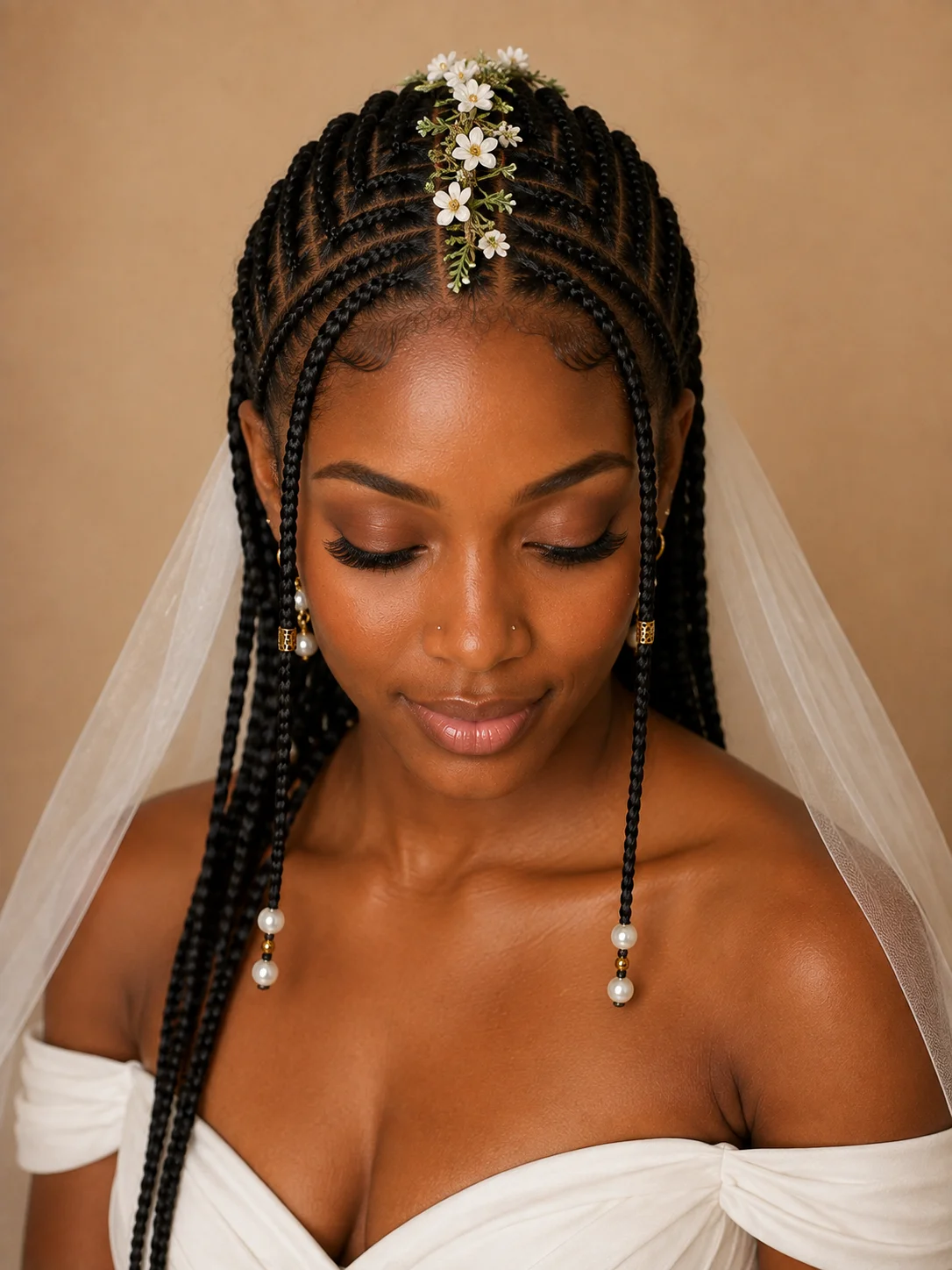 Floral Crown Along Center Cornrow
The adornment choices for fulani braids for weddings are what elevate the style from everyday wear to bridal. The key is substituting or supplementing the standard gold cuffs with bridal-appropriate materials that add elegance without losing the cultural authenticity of the Fulani pattern.
The most popular bridal combination — gold cuffs near the root with pearl beads at mid-length on each face-framing braid. Classic and elegant.
The most culturally authentic bridal combination — cowrie shells carry traditional significance and their ivory-white color reads as genuinely bridal.
A large ornate gold cuff used as the securing element for a half-up or ponytail style — visible as a crown-like accessory that adds a regal quality.
For an understated bridal look, a single small gold cuff on each face-framing braid — restrained and appropriate for minimalist aesthetics.
If you have never worn Fulani braids before, consider a trial install 6 weeks before the wedding to confirm the style, adornment placement, and updo option you want.
The ideal window for installing fulani braids for weddings. The braids have time to settle and any initial scalp tightness fully relaxes, while the style still looks fresh on the wedding day.
Apply edge control to the hairline, re-smooth any flyaways with a soft brush, and sleep with a satin bonnet. Take five minutes the next morning to re-lay edges.
Gather the braids into your chosen updo, secure, and finish edges. The entire styling process should take under ten minutes on the wedding day.
Independent informational website — not affiliated with any salon or brand. | Disclaimer | Privacy Policy | Contact