Where the style comes from, what the beads and cowrie shells actually symbolize, the "Bo braids" myth worth retiring, and how a centuries-old tradition became a global hairstyle.
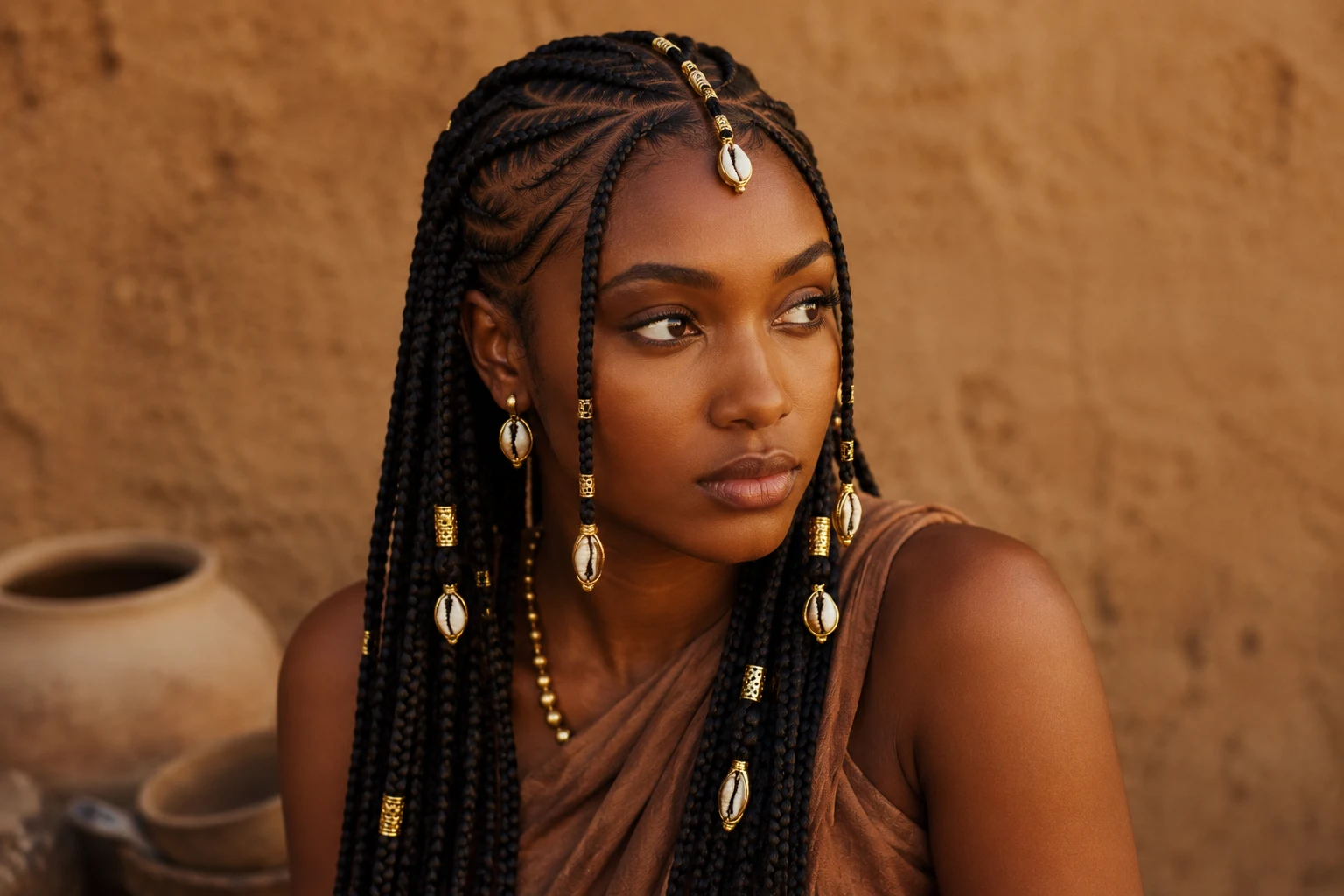
The Fulani — also called the Fula — are a nomadic ethnic group historically spread across West Africa and the Sahel, traditionally known for pastoral cattle-herding life and a distinct cultural identity.1 Fulani braids are found across Nigeria, Senegal, Guinea, Mali, Niger, Cameroon, Burkina Faso, Mauritania, Gambia, Chad, Guinea-Bissau, Sierra Leone, Ivory Coast, Togo, and Sudan — a reach that explains why the style carries slightly different regional variations depending on where it was practiced.1
In pre-colonial Fulani communities, hairstyling was never just about appearance. Hair carried real social meaning, with each community's styling traditions forming an integral part of cultural identity — indicating family background, tribe, marital status, age, and wealth.1,2 Braiding itself was often a communal, intergenerational activity, with skills and patterns passed from mother to daughter.2
The adornments woven into Fulani braids were never purely decorative. Cowrie shells were historically used as currency across parts of Africa, so wearing them in the hair was a way of displaying wealth and prosperity.1,3 Different materials carried their own distinct symbolism beyond the shells themselves:
Ancient symbols of wealth, blessing, and — historically — actual currency.
Believed to bring luck and protection to the wearer.
Traditional symbols of fertility and womanhood.
Linked to water spirits and ancestral migration routes.
Historically, the style was used to mark marital status, wealth, fertility, and social status — the cowrie shells, beads, and metal fringe each carried their own attached meanings.1,4 A woman's braid pattern could be read by others in her community almost like a sentence, communicating who she was and where she stood without a single word spoken.
That symbolic role didn't stay confined to West Africa, either. Oral histories referenced in braiding-history documentaries describe braid patterns functioning as a form of communication among women during the transatlantic slave trade and its aftermath — passed down within Black communities more as lived, spoken history than as something formally archived in written records.2 It's a piece of the style's story worth naming honestly, even where the documentation is thinner than the more recent history below.
In 1979, actress Bo Derek wore this style of braids in the film 10, and the look became so associated with her that it picked up the nickname "Bo braids" or "Bo Derek braids" in parts of American pop culture.5 The braids already had a name and a history that predated the film by centuries — they just weren't widely credited at the time.
The naming issue resurfaced publicly in 2018, when a celebrity referred to wearing the style as "Bo West" and drew criticism for crediting Derek rather than the Fulani people the style is named for.5 "Bo braids" isn't accurate — it's a decades-old mislabel that stuck, and most braiding educators today use "Fulani braids" specifically to keep the credit where it belongs.
Since then, the style has moved through several well-documented moments in mainstream visibility, alongside its continued, uninterrupted practice within Fulani communities as a living tradition rather than a historical reference point:
Brought the look to a mainstream American audience, without crediting its Fulani origins — the source of the "Bo braids" mislabel.5
Wore Fulani braids on her debut album cover, a look widely credited with popularizing the style for a new generation.6
Wore Fulani braids on the red carpet, putting the style back in front of a global fashion audience.6
Short-form video turned Fulani braids into one of the most searched protective styles worldwide, with artists like Doechii keeping it visible in music and fashion.
Modern Fulani braid styling has expanded considerably — color, curly ends, jumbo sections, and boho textures are all common today, none of which existed in the traditional form. What's remained consistent across generations is the core structural signature: the center cornrow, the face-framing braids, and the use of beads or shells as a finishing touch. That structure is what still makes a style recognizably "Fulani," regardless of how it's modernized.
Independent informational website — not affiliated with any salon or brand. | Disclaimer | Privacy Policy | Contact