
Fulani braids on kids are one of the most popular protective styles for children — age-appropriate, customizable with colorful beads, and gentle enough for young scalps when installed correctly.
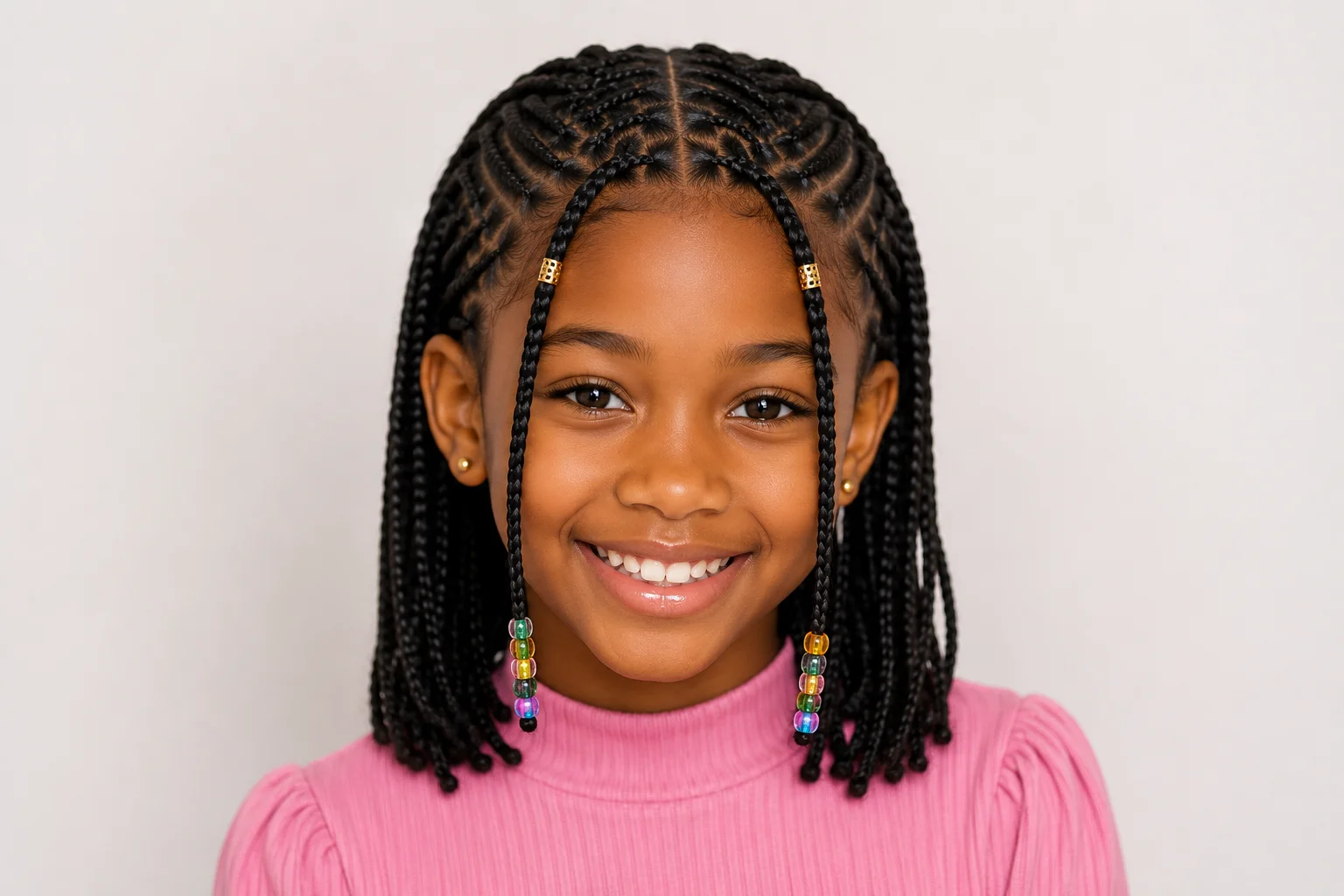
Fulani braids on kids are one of the most widely chosen protective styles for children with natural hair — and for good reason. The pattern is visually striking and age-appropriate, the style can be customized with colorful beads and fun accessories that children love, and when installed at the correct tension it is genuinely protective rather than damaging for young scalps. Many parents choose fulani braids on kids specifically because the style reduces the daily manipulation and detangling that children often find uncomfortable.
The key distinction between a great fulani braids on kids install and a harmful one is tension. Children's scalps and hairlines are more sensitive than adult scalps, and the hair follicles of young children are still developing. Tight braiding on young hair causes traction stress that can result in hairline recession or follicle damage at an age when the hair should be growing at its most vigorous rate. Low tension, larger sections, and a knotless technique are the three non-negotiables for fulani braids on kids.
The best choice for younger children — fewer braids mean a shorter install time, less tension on the scalp, and a more comfortable experience. See the jumbo guide.
Suitable for older children aged 8 and above who can sit for longer sessions. Adds more detail to the pattern while remaining manageable. See the medium guide.
The gentlest installation technique for any age — the feed-in method creates a flatter, lighter root attachment with significantly less tension than a traditional knot. See the knotless guide.
Plastic pony beads, colorful acrylic beads, and bright rubber bands on the face-framing braids make the style fun and personal for children. See the beads guide.

Most braiding specialists recommend waiting until around age 5 or 6 before installing fulani braids on kids. At that age, the hair is typically long enough to hold braids securely and the child is usually able to sit still for the duration of a jumbo install. Younger children can have the Fulani pattern done in a simplified version — a basic center cornrow with two face-framing braids only, which takes 30 to 45 minutes rather than a full install session.
For children under 5, loose twists or simple cornrows are generally a better choice — they are gentler on developing scalps and faster to install and remove. The Fulani pattern can be introduced gradually as the child gets older and the hair grows longer.
Fulani braids on kids typically last 3 to 5 weeks — less than adult installs because children sleep without protective bonnets more often, are more physically active which causes friction on the braids, and have faster-growing natural hair at the root which makes new growth visible sooner. Refreshing the edges and re-beading loose braids at week 2 can extend the style's neat appearance by another week or two.
Remove fulani braids on kids no later than 5 to 6 weeks after installation. Children's hair at the root is more delicate than adult hair and shed hair accumulates inside the braids faster due to the higher growth rate at young ages — leaving braids in beyond 6 weeks significantly increases matting and breakage risk during takedown. For removal tips, see our guide on how to take down Fulani braids safely.
Independent informational website — not affiliated with any salon or brand. | Disclaimer | Privacy Policy | Contact