
Fulani braids on short hair are entirely achievable — here is what length you actually need, when extensions are necessary, and which styles work best for shorter hair.
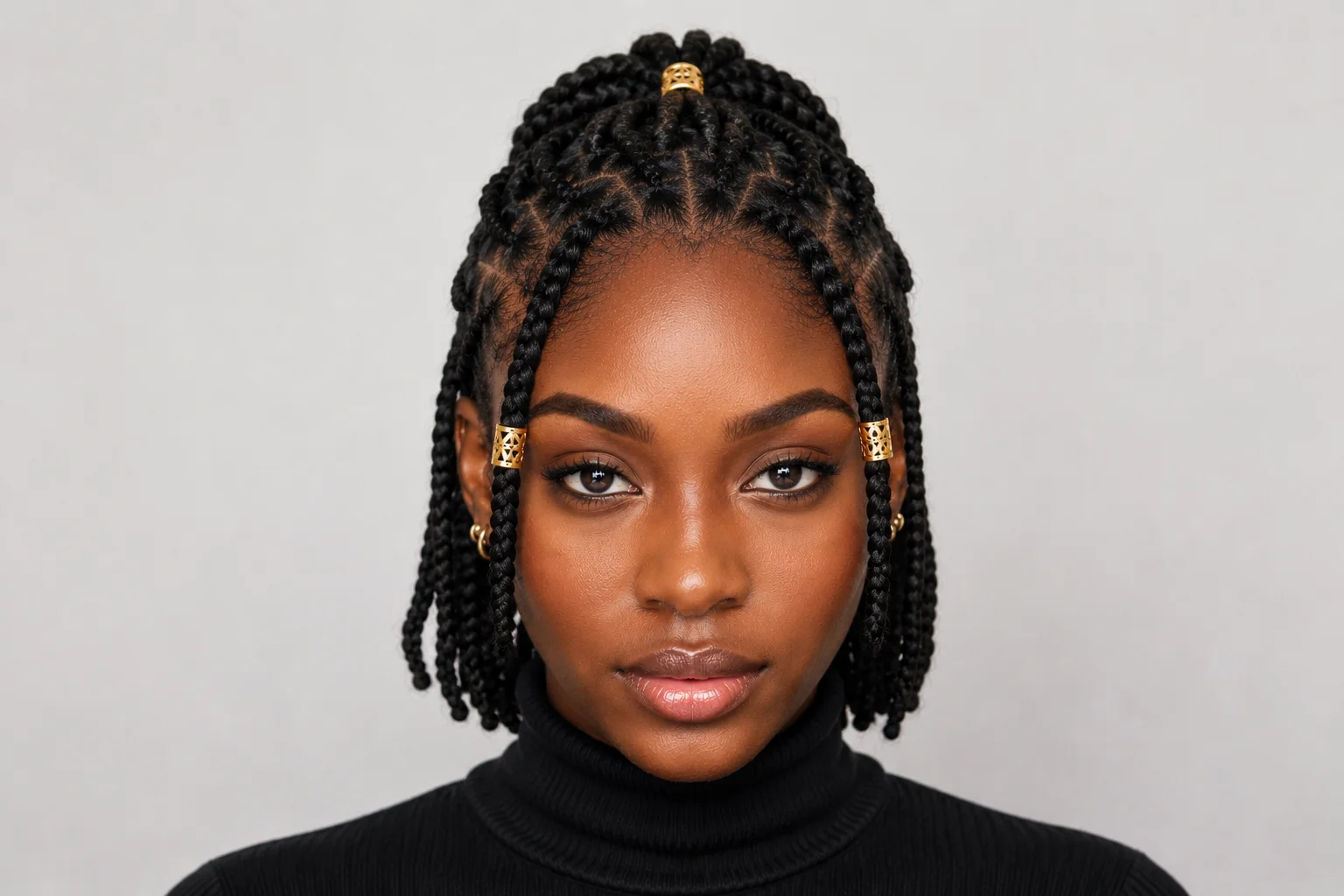
Fulani braids on short hair are completely possible — and more common than most people expect. The key requirement is not length but root length: as long as the natural hair at the scalp is at least 3 to 4 inches long, there is enough hair to anchor extension braiding hair securely at the root and produce a full Fulani install that looks identical to the style on longer hair. The extension hair provides all the length; the natural hair simply needs to be long enough to grip.
The most important thing to understand about fulani braids on short hair is that the face-framing braids and center cornrow — the two elements that define the Fulani pattern — are visible from the scalp regardless of overall hair length. Even on a chin-length install, the distinctive Fulani part pattern is immediately recognizable. Short hair does not compromise the style's defining features in any way.
Where fulani braids on short hair differ from longer installs is in the updo options available after installation. Styles like the bun or ponytail require sufficient braid length to gather and secure — on a chin-length install, only the half-up style is typically achievable without the braids being too short to hold the gathered section.
For fulani braids on short hair with extensions, the practical minimum is 3 inches of natural hair at the root. Below that threshold, the extension hair does not have enough natural hair to wrap around at the attachment point, and the braids will slip out within days regardless of braiding technique. Hair that is 2 inches or shorter is generally better suited to cornrow-only styles that lie flat against the scalp rather than individual hanging braids.
At 3 to 4 inches, a skilled braider can achieve a secure Fulani install with extensions that lasts the standard 6 to 8 weeks. At 4 to 6 inches, the install becomes significantly easier and more secure, and the natural hair contributes more visibly to the texture and body of each braid.
The best choice for short hair — larger sections are easier to anchor to shorter natural hair and install faster. See the jumbo guide.
Works well on hair that is 4 inches or longer. The most common short hair install size — balances detail with root security. See the medium guide.
A good option for short hair as the knotless technique creates a flatter, more secure attachment at the root than a traditional knot. See the knotless guide.
Curly ends add visual volume that compensates for shorter braid length — a great choice for making a short hair install look fuller. See the boho guide.
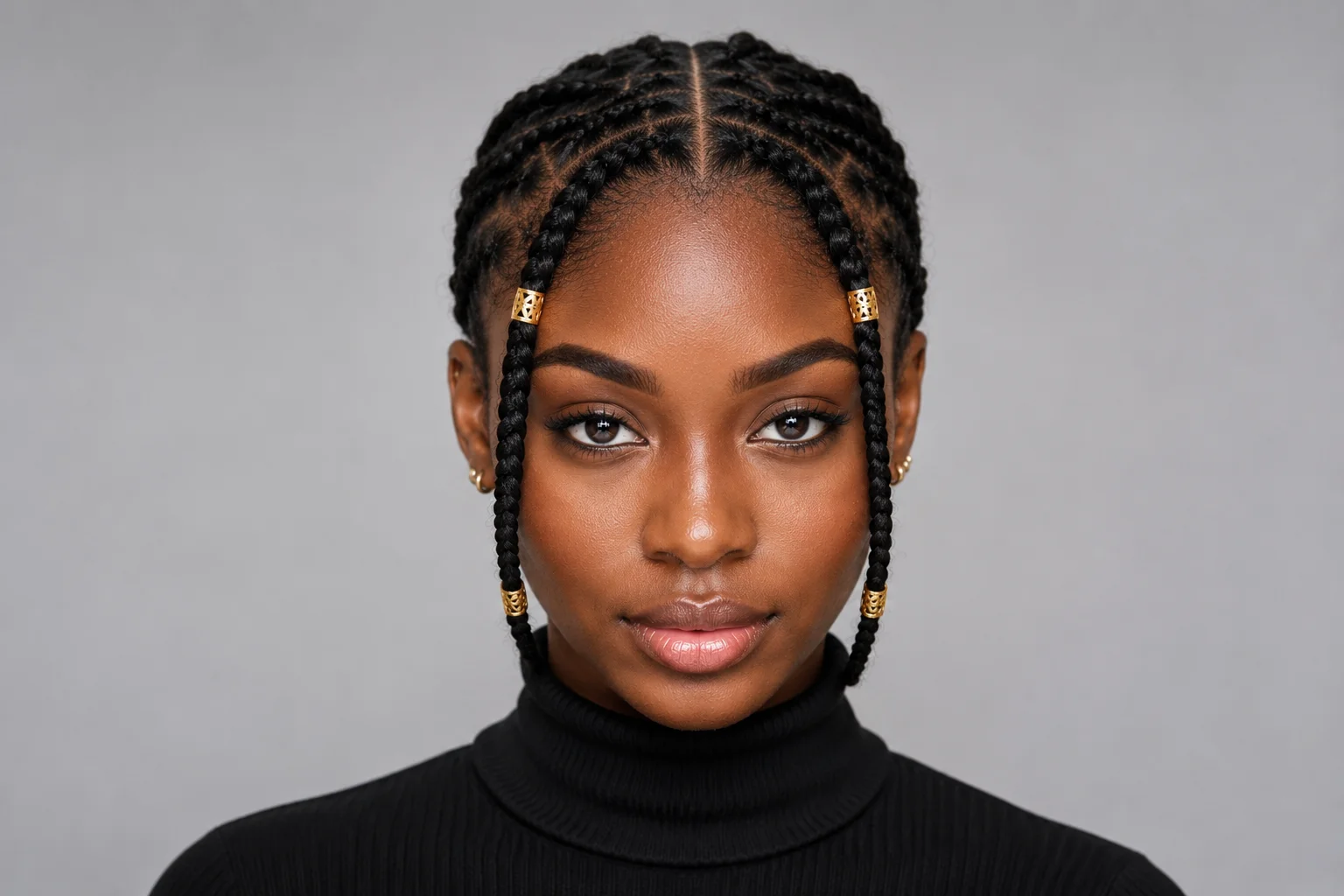
For fulani braids on short hair, stretching the natural hair before install is even more important than on longer hair. Shrinkage on short 4C or 4B hair can reduce effective working length by 50% — stretching recovers that length and makes sectioning and anchoring significantly easier.
Rather than tying a traditional knot at the root, ask your braider to use a feed-in technique where the extension hair is gradually incorporated into the natural hair over the first inch of the braid. This distributes the attachment weight more evenly on shorter hair and reduces the risk of slippage.
On short hair, smaller sections mean less natural hair per braid to anchor the extensions — which increases slippage risk. For fulani braids on short hair, go one size larger than you normally would: if you prefer medium braids on long hair, install jumbo on short hair for the same level of security.
Short hair is more susceptible to traction stress than long hair because the hair shaft has less length to distribute the pulling force across. Traction at the root on short hair causes more visible and faster breakage — firm but never tight is the rule for fulani braids on short hair.
Maintenance is especially important for fulani braids on short hair because the shorter natural hair at the root is more prone to dryness and breakage during a long wear period. Apply a lightweight oil directly to the scalp every 3 to 4 days, focusing on the area around the center cornrow where tension is highest. Sleeping with a satin bonnet every night prevents friction that would otherwise cause the short roots to become tangled and matted around the braid attachment points.
Remove fulani braids on short hair no later than 6 to 8 weeks after installation — the shorter the natural hair, the faster accumulated shed hair becomes trapped and matted inside the braids, and the harder the takedown process becomes beyond that window. For a full care routine, see our maintenance guide and our guide on how to take down Fulani braids safely.
Independent informational website — not affiliated with any salon or brand. | Disclaimer | Privacy Policy | Contact