
Home › Fulani Braid Styles › Fulani Braids vs Senegalese Twists
Cornrows or rope twists? Here's how the Fulani center-part crown compares to the smooth, uniform twist pattern that defines Senegalese twists — from install technique to how each one wears down over the weeks.
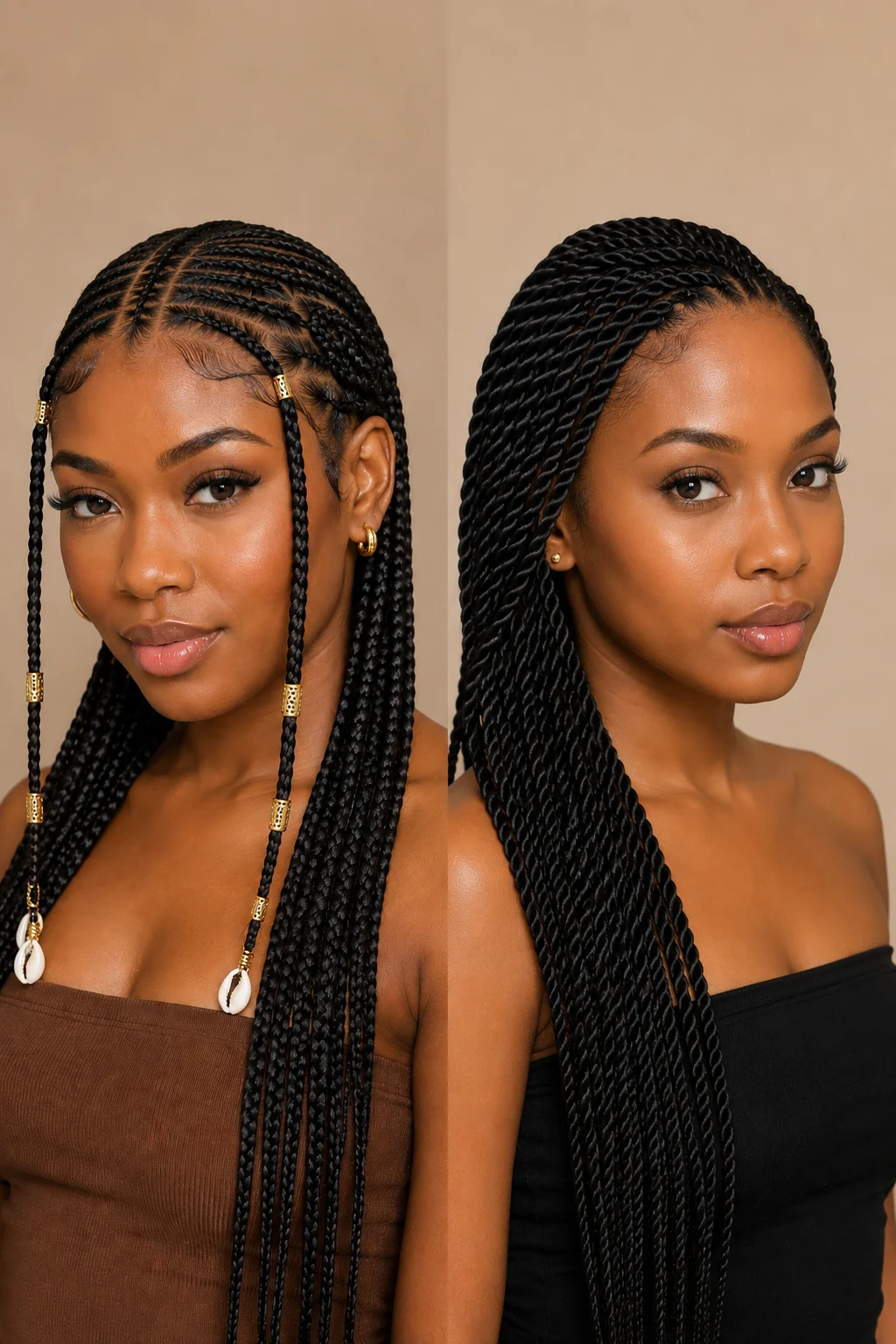
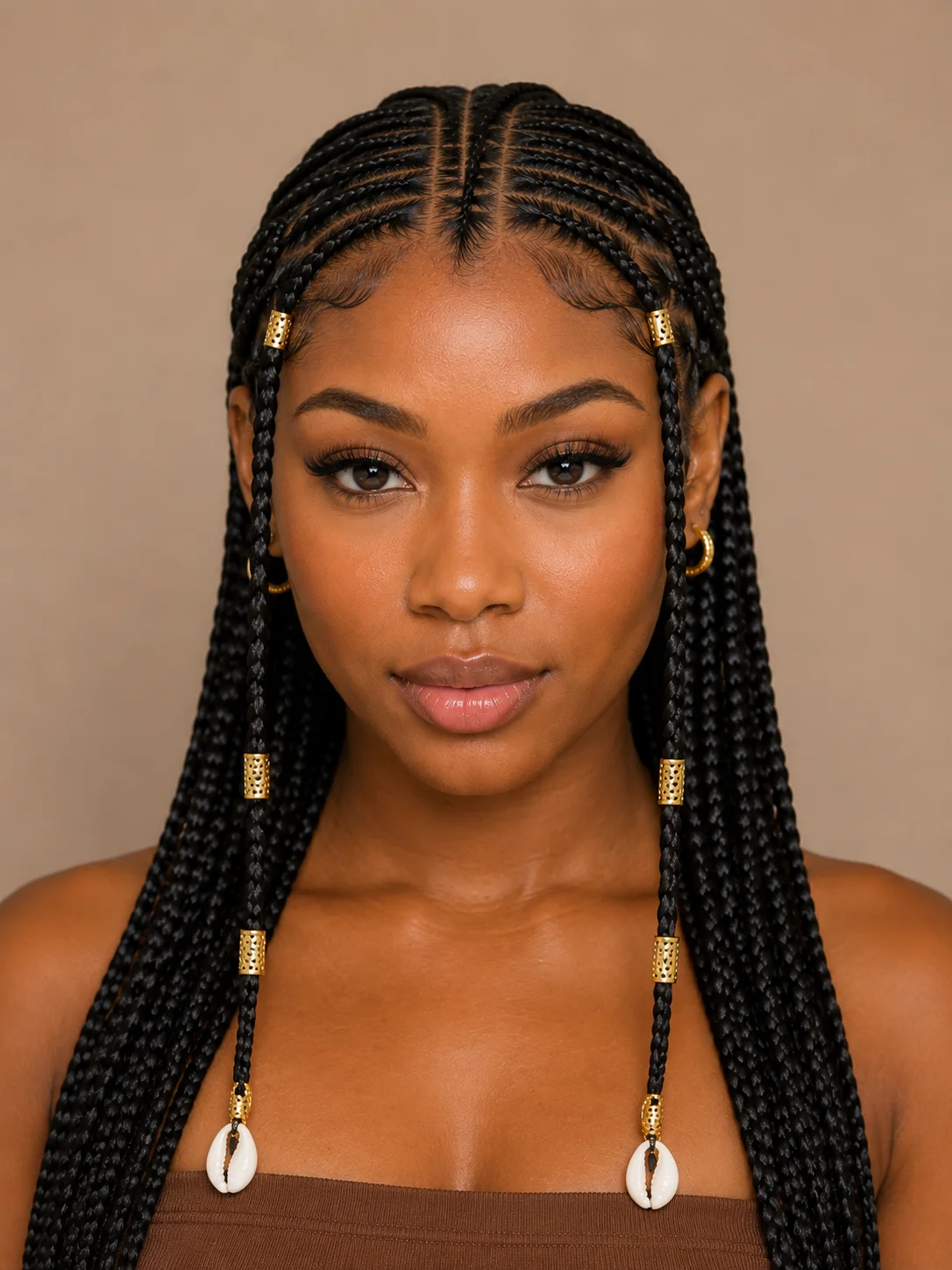
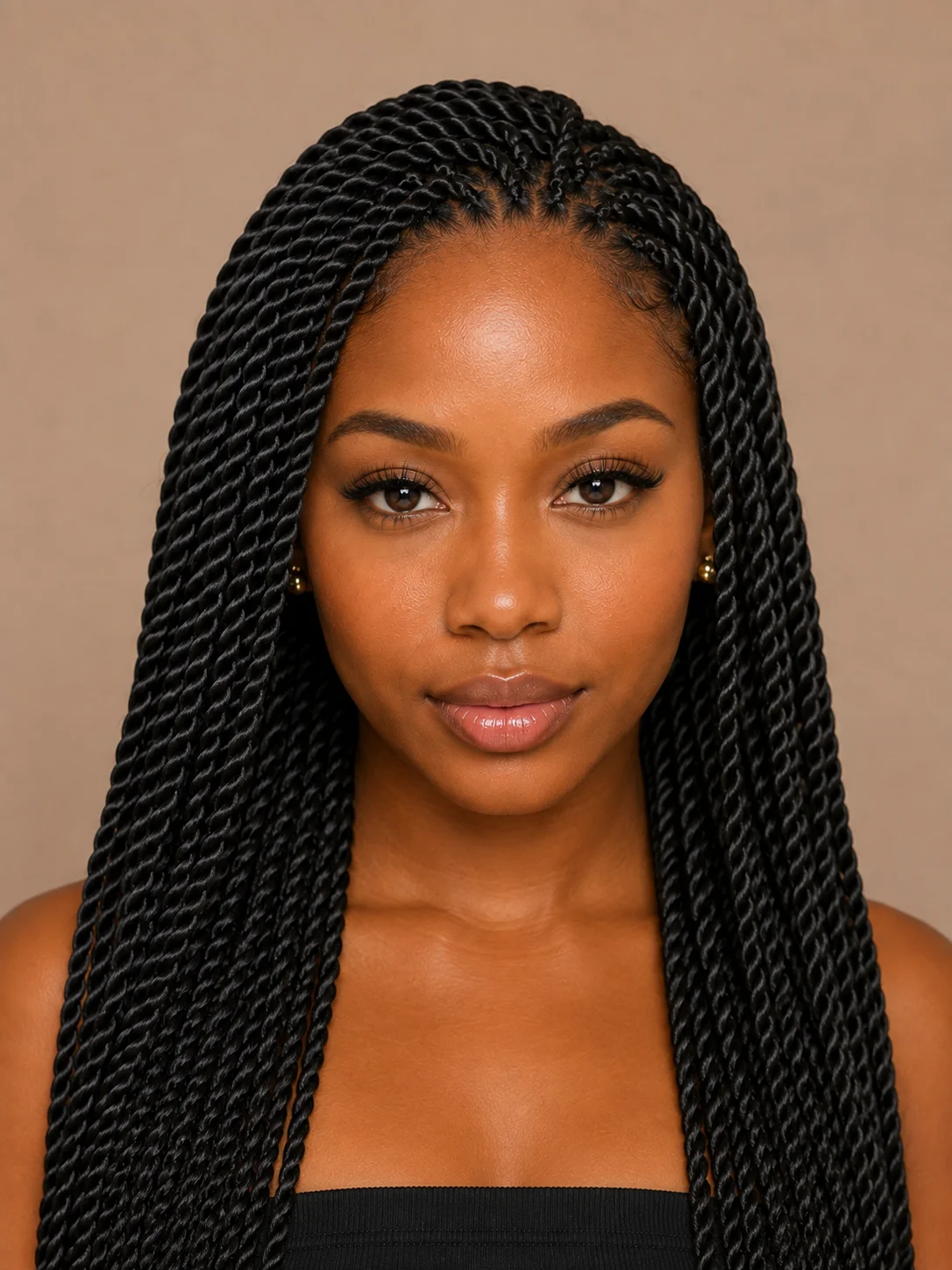
Fulani braids are built with a three-strand braiding technique on a cornrow base — a single center cornrow runs from the hairline to the nape, flanked by face-framing braids, with the rest of the head filled in around that centerpiece. Senegalese twists use an entirely different technique: two strands of hair twisted around each other in a continuous rope pattern, with no cornrow foundation and no center part. That difference in technique is what gives Fulani braids their structured, geometric look and gives Senegalese twists their smooth, rope-like uniformity.
Fulani braids take their name and pattern from the Fulani (Fula) people of West Africa, where the placement and adornments of the braids carried real social meaning. Senegalese twists get their name from Senegal, where the rope-twist technique using kanekalon hair became closely associated with sleek, glossy, salon-perfected results — prized for a smooth finish rather than a decorative pattern.
| Category | Fulani Braids | Senegalese Twists |
|---|---|---|
| Technique | Three-strand braid, cornrow base | Two-strand rope twist, no cornrow |
| Face-Framing | Yes — built into the design | No — neutral all over |
| Longevity | 4–8 weeks | 6–8 weeks |
| Install Time | 4–8 hours | 5–8 hours |
| Salon Cost | $80–$300 | $100–$350 |
| Root Tension | Moderate to firm at cornrow | Lighter, no cornrow tension |
| Beginner Friendly | Moderate | More forgiving |
| Cultural Origin | Fulani people, West Africa | Senegalese braiding tradition |
Senegalese twists typically hold up a little longer than Fulani braids — 6 to 8 weeks compared to 4 to 8 weeks for most Fulani installs. Without a cornrow base, twists don't show new growth at a visible part line the way Fulani braids do, so the style can look fresh for longer even as hair grows out. Fulani's face-framing braids also get more daily handling — pushed back, tucked behind the ear — which causes them to loosen and frizz sooner than the evenly-worn rope pattern of twists.
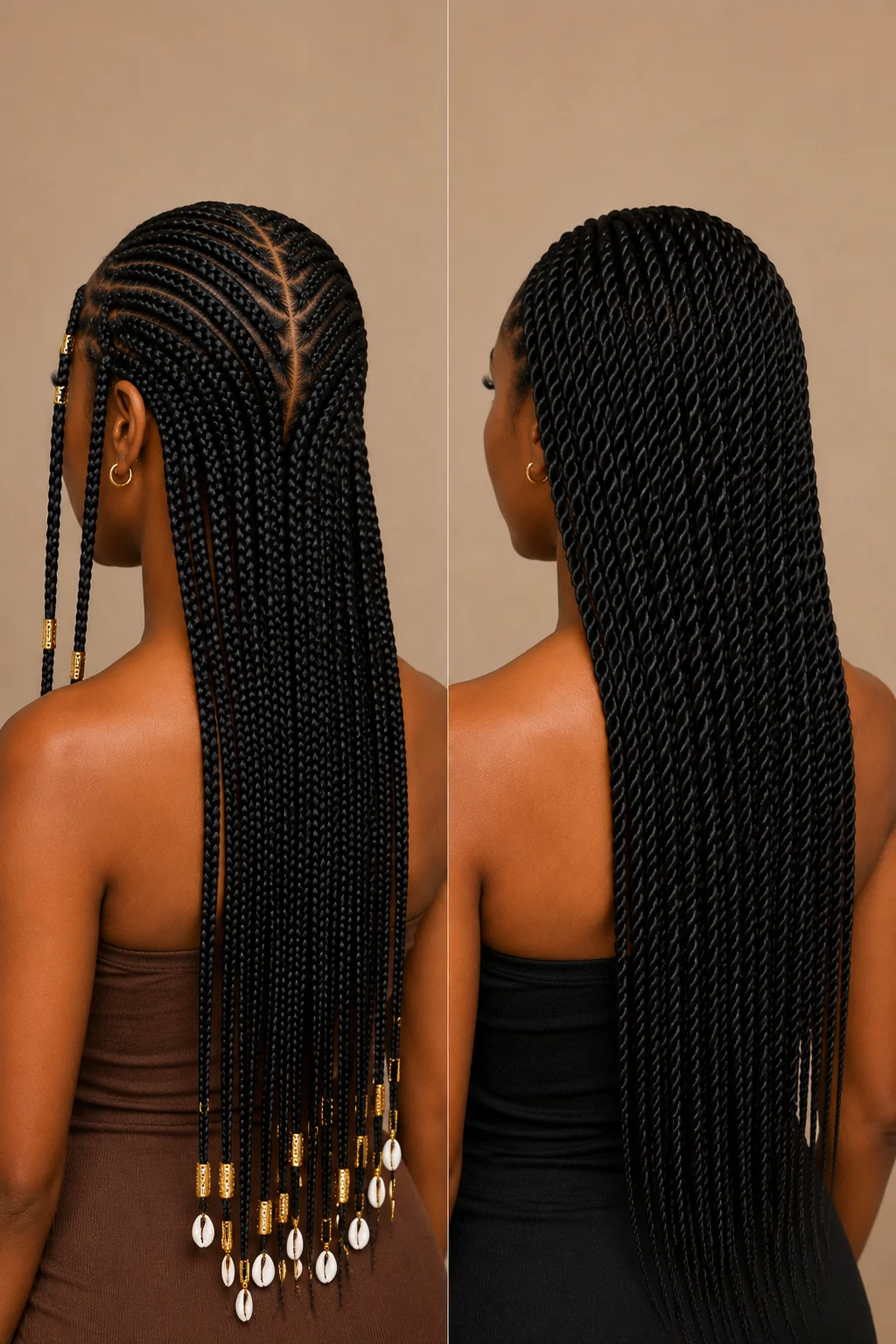
Want a defined, geometric pattern with a visible center part and face frame? Go Fulani. Want a smooth, rope-like texture with no dominant part and low daily maintenance? Go Senegalese twists. Both are equally protective at the right tension — this comes down to texture preference, not hair health.
Both styles rely on extension hair fed into your natural hair, so hair type isn't a deciding factor between them — 4C and other coily textures hold up well under either technique. What differs most is upkeep: Fulani's exposed center part benefits from occasional edge touch-ups, while Senegalese twists mostly need root moisturizing and the occasional re-twist near the hairline as new growth comes in.
Independent informational website — not affiliated with any salon or brand. | Disclaimer | Privacy Policy | Contact