Fulani braids vs cornrows — two styles that both use the cornrowing technique but produce completely different results in terms of length, versatility, and visual impact.
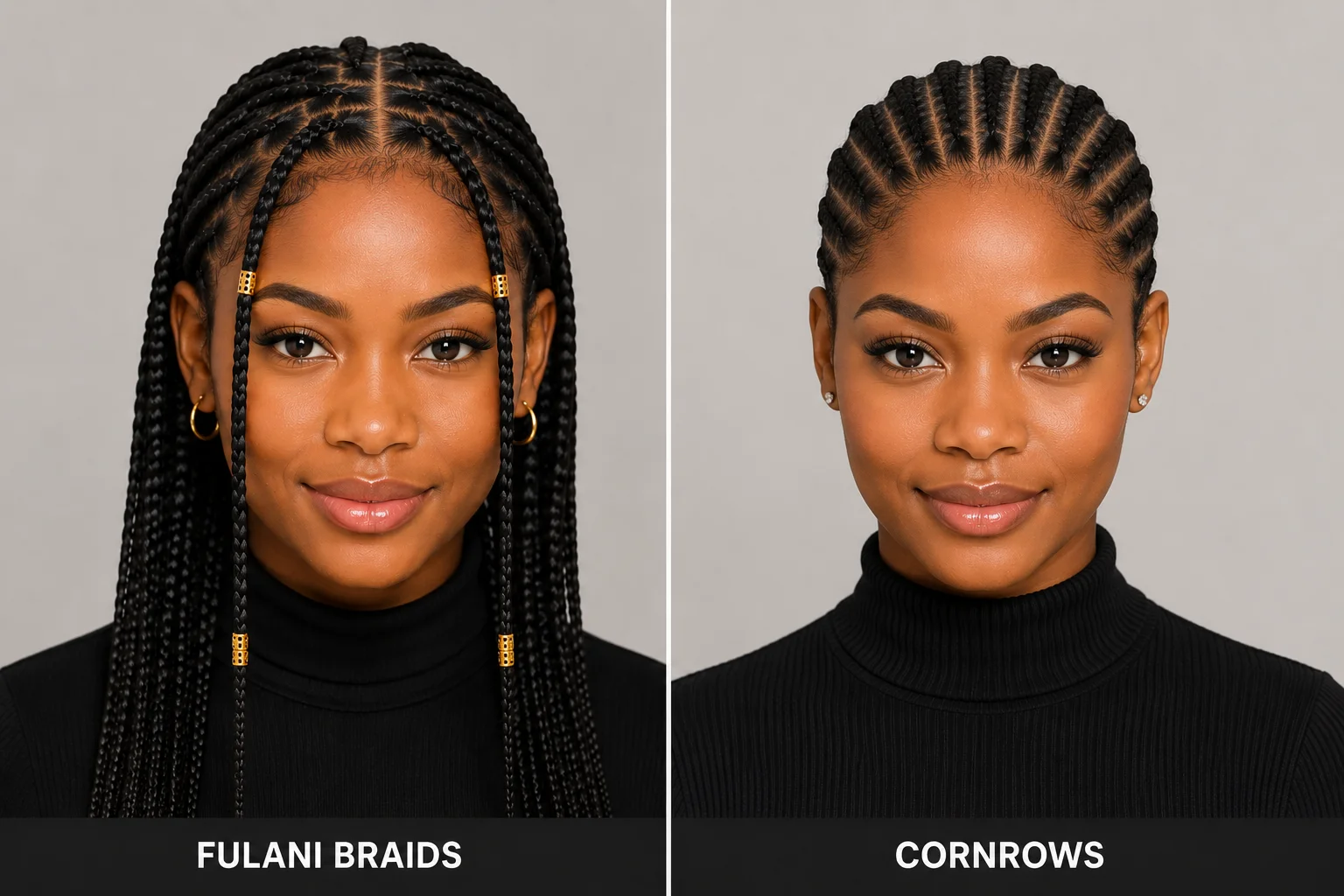
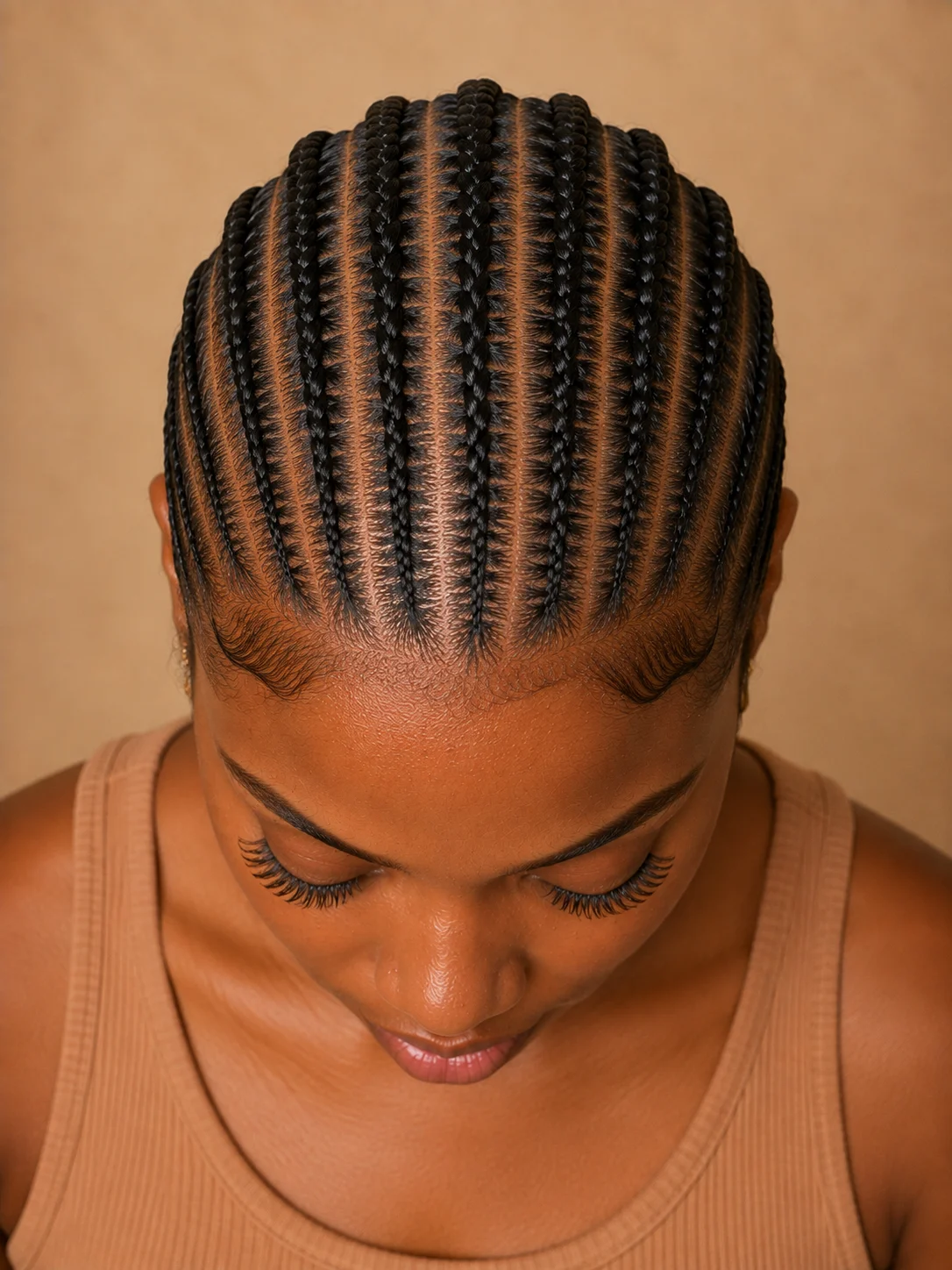
The fulani braids vs cornrows comparison is one of the most commonly confused distinctions in protective styling — partly because Fulani braids actually use cornrowing as a technique within the style. The key difference is this: cornrows lie entirely flat against the scalp from root to end, while Fulani braids use a cornrow at the center and scalp sections of the face-framing braids before transitioning into hanging individual braids that extend past the scalp. Cornrows stay close to the head; Fulani braids have length and movement.
In the fulani braids vs cornrows comparison, cornrows are the foundation technique and Fulani braids are a complete style that incorporates that technique as one element. You can have cornrows without any Fulani elements, but you cannot have Fulani braids without cornrowing — the center section of every Fulani install is a cornrow by definition.
| Category | Fulani Braids | Cornrows |
|---|---|---|
| Technique | Cornrow + individual hanging braids | Flat cornrow only, no hanging length |
| Extensions | Almost always used | Optional, less common |
| Longevity | 6–10 weeks | 2–6 weeks |
| Install Time | 4–8 hours | 1–4 hours |
| Salon Cost | $150–$300+ | $60–$150 |
| Styling Options | Many — updos, flip-over, half-up | Limited — style is fixed at install |
| Hair Length Needed | 3+ inches at root | 2+ inches |
| Best For | Statement protective style | Low-maintenance close-to-scalp style |
This is the most common question in the fulani braids vs cornrows comparison. Technically, Fulani braids use cornrowing as a component — the center braid running from the front hairline to the nape is cornrowed flat, and the scalp portion of each face-framing braid begins as a cornrow before transitioning to a hanging individual braid. But Fulani braids as a complete style are not cornrows — they produce a fundamentally different visual result with length, movement, and adornment that flat cornrows do not have.
The clearest way to understand the distinction: if you see flat braids lying against the scalp with no hanging length, that is cornrows. If you see a center scalp pattern leading into hanging braids with beads and face-framing sections, that is Fulani braids. The cornrowing technique is shared; the styles are distinct.
If you already have straight-back cornrows installed and want the Fulani look, you don't necessarily need to take everything down and start over. A stylist can often add extension hair to the existing center and face-framing rows to create hanging length, effectively converting a cornrow base into a Fulani-style result — as long as the original cornrow pattern already follows a center-part layout rather than running in a different direction.
The reverse conversion — going from Fulani braids to plain cornrows — is simpler: removing the hanging extension sections and leaving just the flat scalp cornrows underneath achieves a cornrow-only look, since the cornrow technique was already there as the foundation. This is one practical advantage of understanding the fulani braids vs cornrows relationship: because Fulani braids build on top of cornrowing rather than being a completely separate technique, moving between the two styles is more flexible than converting between, say, cornrows and box braids.
Beyond overall lifespan, the two styles differ in what they actually require from you week to week.
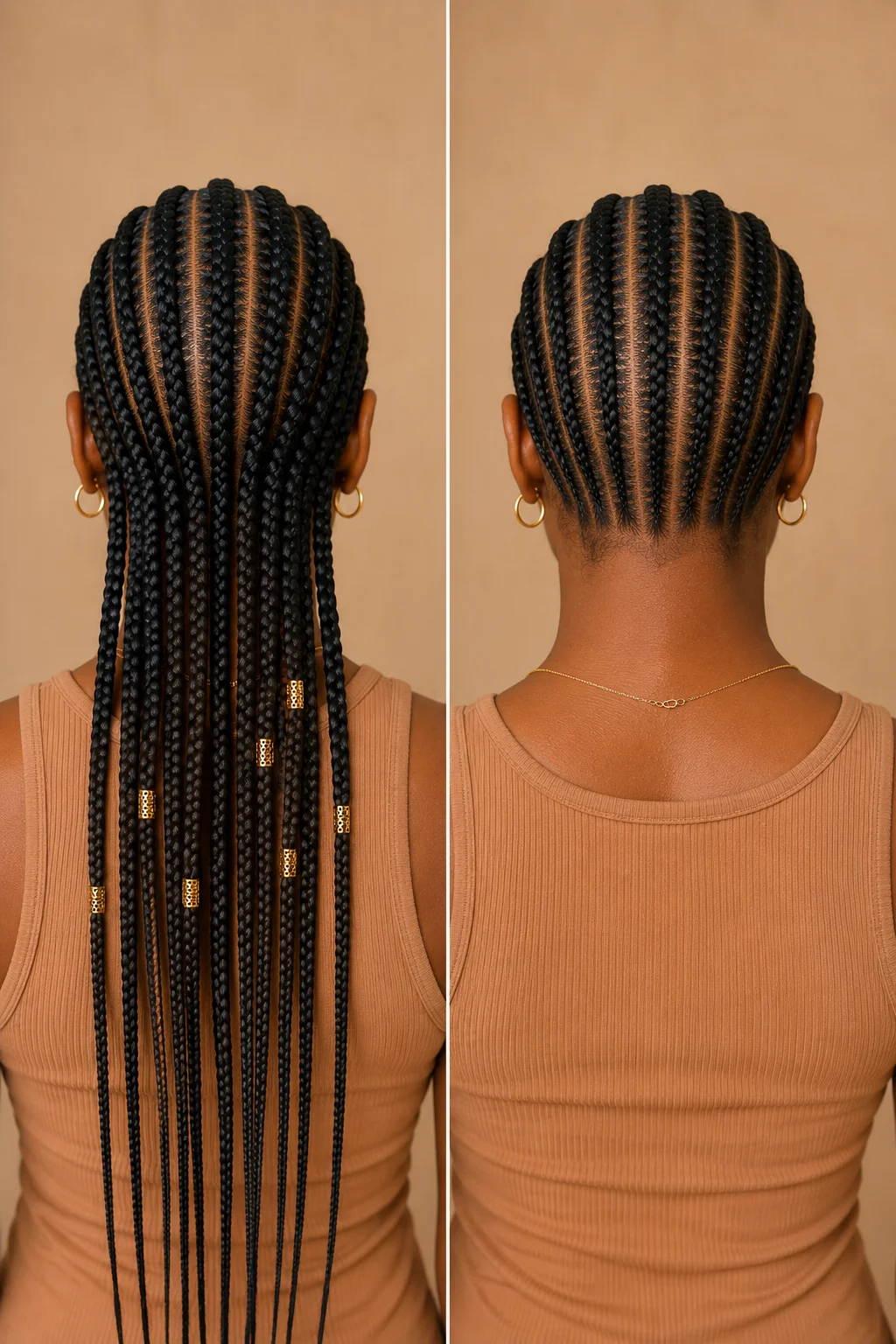
The practical takeaway: cornrows need less daily styling attention since there's no hanging length or face-framing detail to maintain, but they show new growth and need a refresh sooner. Fulani braids take a few more minutes of daily upkeep but hold their finished look for longer before a touch-up is needed.
Fulani braids last significantly longer than traditional cornrows — 6 to 10 weeks with extensions compared to 2 to 6 weeks for cornrows on natural hair. The extension hair in Fulani braids maintains the braid structure and weight throughout the wear period, while natural hair cornrows begin to show new growth and frizzing at the root much faster. If longevity is the primary concern in the fulani braids vs cornrows decision, Fulani braids with extensions are the clear winner.
For more comparisons see our guides on Fulani braids vs box braids and Fulani braids vs lemonade braids, and explore the full range of Fulani styles in our complete style guide.
Whichever pattern you land on, both styles have popular variations worth knowing about before you book.
Independent informational website — not affiliated with any salon or brand. | Disclaimer | Privacy Policy | Contact