
No extensions required — how to do Fulani braids with natural hair only, including prep, sectioning, and what results to expect on different hair types.
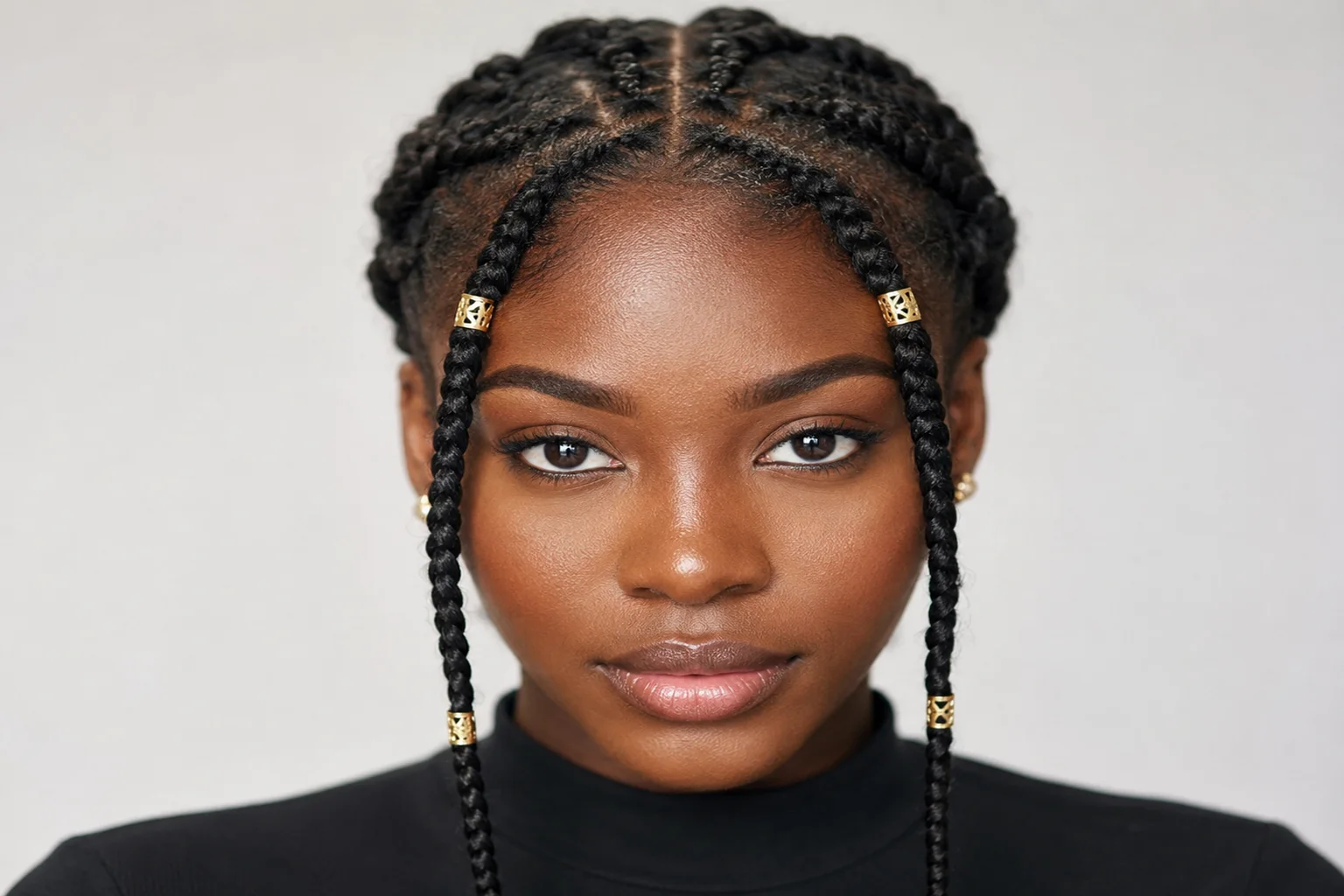
Yes — Fulani braids can be done entirely on natural hair without any extension hair added. The result looks different from an extension-based install: the braids are thicker, shorter, and carry the natural hair's own texture throughout rather than the uniform smoothness of kanekalon. On 4C hair in particular, the finished braids have a distinct coily texture visible along the braid that gives the style a more organic, textured feel than the sleek extension version.
How to do Fulani braids with natural hair follows the same pattern as any other Fulani install — center cornrow, face-framing braids, remaining sections — but the prep work is more important and the process requires more moisture throughout. Natural hair braids without extensions are also more prone to unraveling at the ends, so sealing technique matters more in a natural hair install than when extension hair adds weight and bulk to each braid tip.
Works very well — the tight coil pattern grips itself during braiding, creating firm, well-defined braids without needing extension hair to hold the braid structure. See our dedicated 4C hair guide.
Also holds braids well without extensions. Slightly more shrinkage than 4C means stretching or blow-drying before braiding helps achieve a cleaner part line and more even braid thickness.
Looser curl patterns can be braided without extensions but the braids tend to unravel faster at the ends than tighter textures — sealing with a braid gel or small rubber band at the tip is recommended.
Hair that is part natural, part relaxed can be braided into the Fulani pattern but the different textures create uneven tension — start at the natural root and braid toward the relaxed ends carefully.
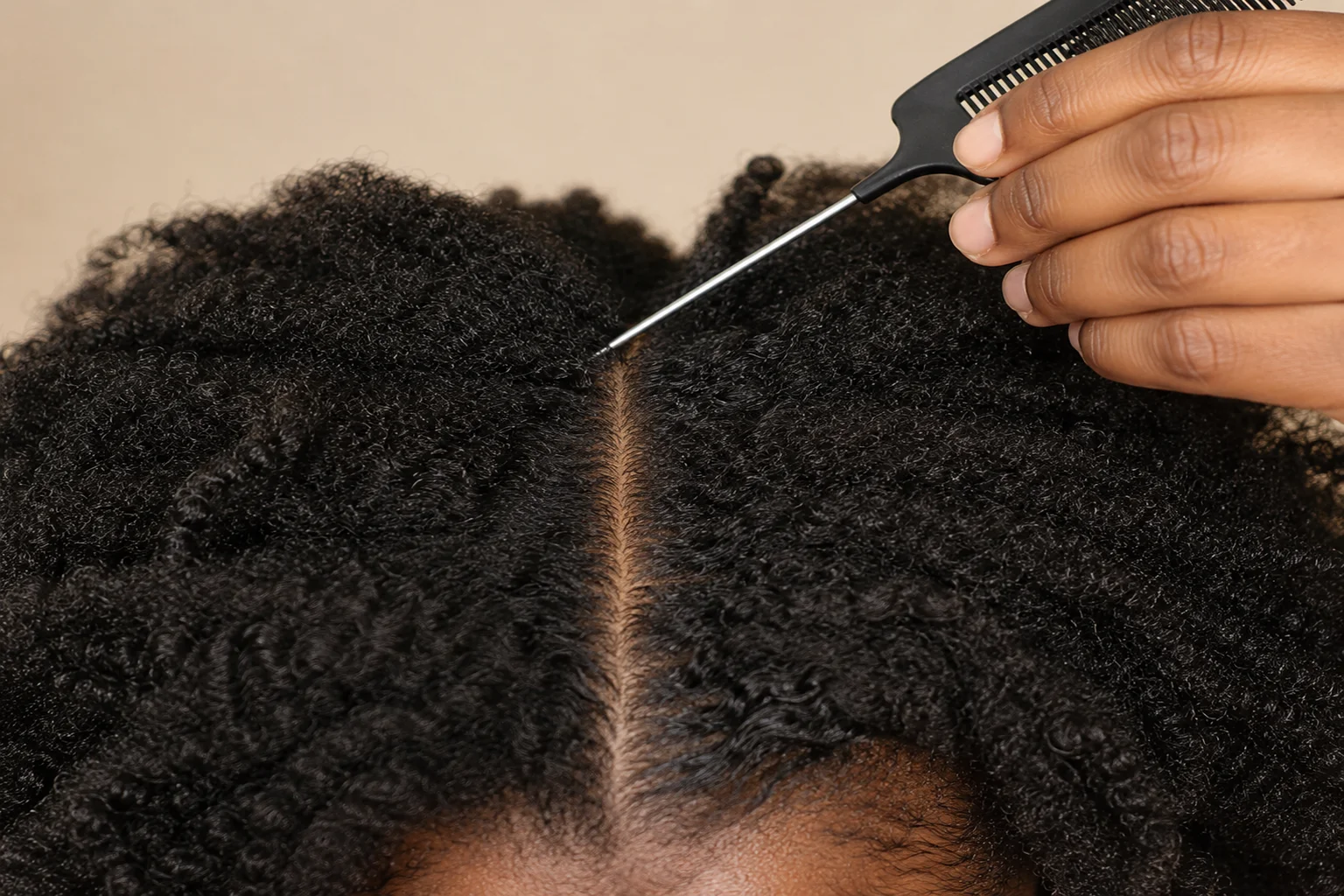
Prep is the most important stage when doing Fulani braids with natural hair. Unlike extension installs where the kanekalon hair provides structure and bulk, natural hair braids rely entirely on the hair's own condition and moisture level to hold together from root to tip.
Start with freshly washed, deep-conditioned hair. Natural hair braided in a dry or product-buildup state is more prone to breakage and produces less defined braids. A moisturizing deep conditioner applied the night before significantly improves braid texture and hold.
Detangle completely while hair is wet and conditioned, working section by section from ends to roots. Attempting to section and braid tangled natural hair causes unnecessary tension and makes the center part crooked.
For 4B and 4C hair especially, gentle stretching via banding, African threading, or low-heat blow-drying before braiding reduces shrinkage and makes sectioning much easier. Stretched hair produces a cleaner center part line and more even braid thickness.
Work a light braid gel or shea butter through each section before braiding. This smooths the cuticle, reduces frizz during braiding, and helps the finished braid hold its shape. Avoid heavy oils that make the hair slippery — they reduce grip between strands.
Use a rat tail comb to draw a clean center part from the front hairline straight back. On natural hair, dampen the part line with a spray bottle first — wet hair parts more cleanly than dry hair and the part line stays visible longer during the braiding session.
On each side of the center part, separate two thin sections from the hairline toward the ear for the face-framing braids. On natural hair these sections can be slightly thicker than in an extension install since there is no added bulk from extension hair.
Braid the center cornrow from the front hairline to the nape with firm, even tension. On natural hair the center cornrow tends to look slightly wider and more textured than an extension cornrow — this is normal and gives the natural hair version of the style its distinctive look.
Divide the remaining hair into your chosen number of sections and braid each from root to tip. Keep moisture in the hair by spritzing with water as you work — natural hair dries out during long braiding sessions, making the ends harder to braid neatly.
Natural hair braid ends cannot be heat-sealed like synthetic extensions. Instead, apply a small amount of braid gel to the last inch of each braid, or secure with a tiny clear rubber band. Adding gold cuffs near the ends also helps weight them and reduces unraveling.
For a detailed look at styling and caring for Fulani braids specifically on natural hair after installation, see our guide on Fulani braids on natural hair. For the 4C-specific experience, including shrinkage management and the best products, see our 4C hair guide. And for advice on keeping any Fulani install looking fresh, read our maintenance guide.
Independent informational website — not affiliated with any salon or brand. | Disclaimer | Privacy Policy | Contact