
Everything you need to know about using extension hair for Fulani braids — which type to buy, how to feed it in cleanly, and how to seal and finish for a long-lasting result.
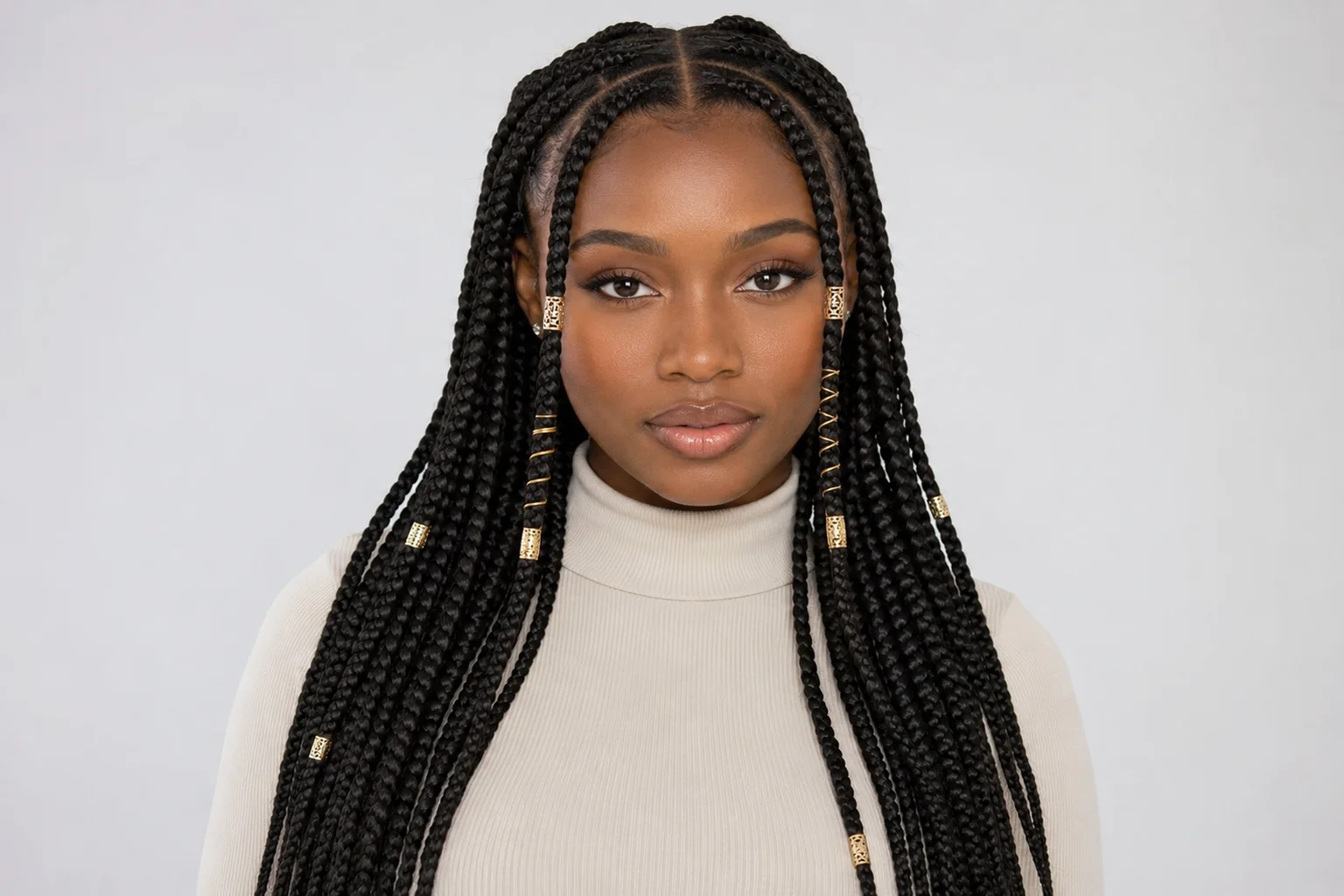
Extensions are used in Fulani braids for three main reasons: length, volume, and durability. Natural hair alone can produce the Fulani pattern on shorter or thinner hair, but adding kanekalon or similar synthetic braiding hair gives the finished braids more body, makes them hang with more weight and definition, and significantly extends how long the style lasts before the natural hair at the root begins to show new growth and unraveling.
For most people, using extensions when learning how to do Fulani braids with extensions also makes the braiding process easier — the extension hair adds enough bulk to each braid that the three strands are easier to distinguish and work with, especially near the ends where natural hair alone can become very fine and difficult to braid neatly.
The vast majority of Fulani braid installs — whether done in a salon or at home — use some form of extension hair. Fulani braids without extensions are possible but produce a noticeably different result in terms of thickness and longevity.
The most popular choice — already stretched to eliminate the need for pre-stretching, lighter than regular kanekalon, and easier to feed in evenly from root to tip.
Widely available and affordable. Needs to be pre-stretched before use by gently pulling sections apart — skipping this step results in uneven braid thickness.
A popular brand known for consistent texture and a wide color range. Works well for both the center cornrow and the individual braids sections.
Another widely used brand — slightly softer texture than standard kanekalon, which some braiders prefer for the face-framing sections where the hair sits closest to the skin.
| Braid Size | Packs Needed | Notes |
|---|---|---|
| Jumbo | 2–3 packs | Large sections use more per braid but fewer braids overall |
| Medium | 3–4 packs | Most common install — balanced between coverage and pack count |
| Small | 4–5 packs | More braids, each needing less hair, but total usage is highest |
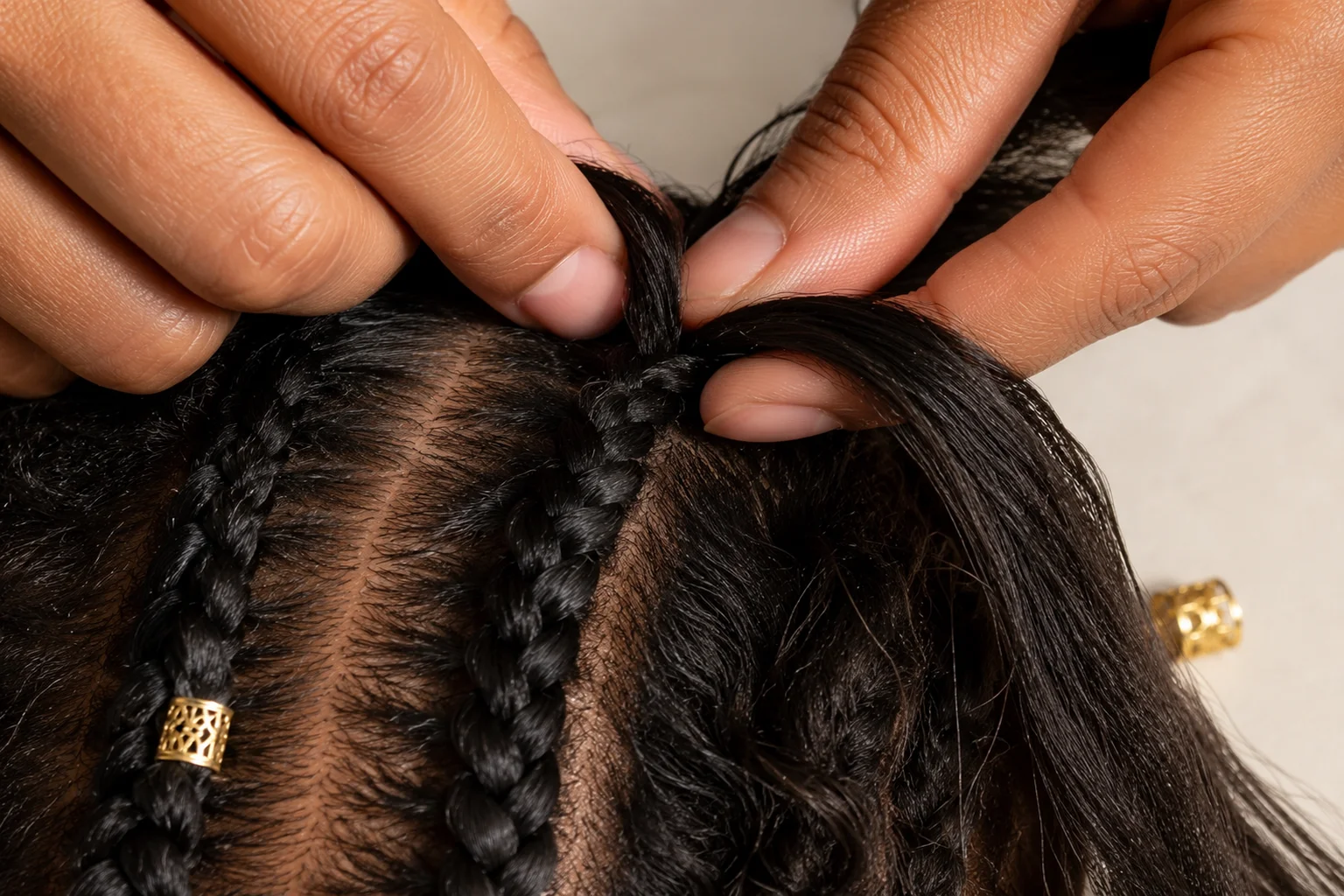
Take a small section of extension hair — roughly the width of a pencil for medium braids — and fold it in half. Pre-stretch if using regular kanekalon by gently pulling the folded section apart before use.
Place the folded midpoint of the extension hair against the natural hair at the root. Loop the extension around the natural hair section and pull both halves through to create a secure anchor. This is the feed-in knot — it should sit flat against the scalp.
Separate the combined natural and extension hair into three even strands. The extension hair should be distributed across all three strands rather than concentrated in one — this prevents a visible lump at the attachment point.
Braid the three strands from root to tip with firm, consistent tension. The attachment point should become invisible within the first three or four crossings of the braid. If a lump is visible at the root after braiding, the extension section was too thick.
Dip the last 2–3 inches of the braid briefly into hot water to heat-seal the synthetic hair. Hold the sealed section for a few seconds while it cools to set the shape. Add any beads or cuffs before sealing — threading them onto a sealed end is significantly harder.
The center cornrow in the Fulani pattern requires a slightly different approach to extension hair than the individual braids. Because the cornrow lies flat against the scalp rather than hanging freely, the extension hair needs to be thinner per addition — feeding in too much at once creates a raised, bumpy cornrow rather than a flat, sleek one. Add extension hair to the cornrow in smaller increments than you would for a standard box braid.
For the face-framing braids specifically, many braiders prefer to use slightly less extension hair than in the rest of the style — thinner face-framing braids sit more naturally against the face and move more freely. See our full guide on adding beads to Fulani braids for advice on incorporating cuffs and cowrie shells into the extension sections, and our hair to buy guide for specific product recommendations.
Independent informational website — not affiliated with any salon or brand. | Disclaimer | Privacy Policy | Contact