
✨ Discover Your Perfect Fulani Braid Style — Take the Quiz →
Home What Are Fulani Braids All Styles How-To Guide Cost Guide History & Meaning Find Your Style
Independent informational guide to Fulani braids — not affiliated with any salon, brand, or product line

Home › Fulani Braid Styles › Fulani Braids vs Tribal Braids

Comparison Guide

Fulani Braids vs Tribal Braids

One is a specific style — the other is the whole category it belongs to. Here's how Fulani braids fit inside the broader world of tribal braids, and what actually sets a "tribal braid" pattern apart.
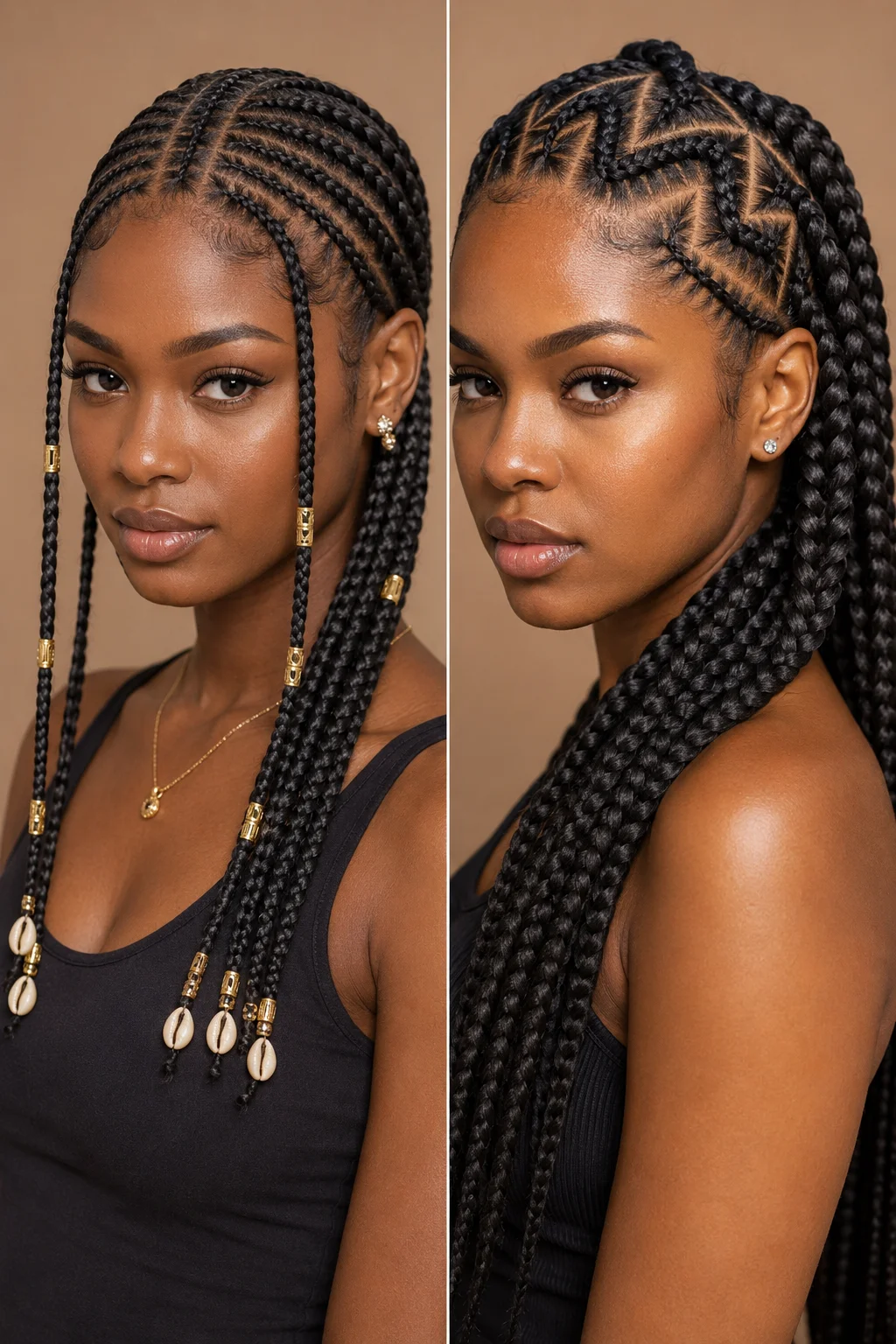
Fulani braids vs tribal braids — side by side comparison showing center cornrow face-framing pattern versus bold geometric zigzag cornrow design
4–8 wksFulani Lifespan
6–10 wksTribal Lifespan
$100–350Typical Cost Range
SubcategoryFulani Is Part of Tribal

A Style vs a Category

This comparison works a little differently than most, because Fulani braids and tribal braids aren't two competing styles — Fulani braids are technically one specific style within the broader tribal braids category. "Tribal braids" is an umbrella term for cornrow patterns with bold, intricate, culturally-rooted designs: zigzags, stars, triangles, and other geometric shapes, usually paired with thick jumbo braids or twists for the remaining length. Fulani braids are a specific pattern under that umbrella — defined by the single center cornrow and symmetrical face-framing braids, rather than an all-over geometric design.

So the real comparison isn't "which is better" — it's "do you want the classic, symmetrical Fulani pattern, or a bolder, more varied geometric tribal design?" Both are rooted in West African braiding traditions and use the same core cornrow technique; they just differ in how the pattern is laid out across the scalp.
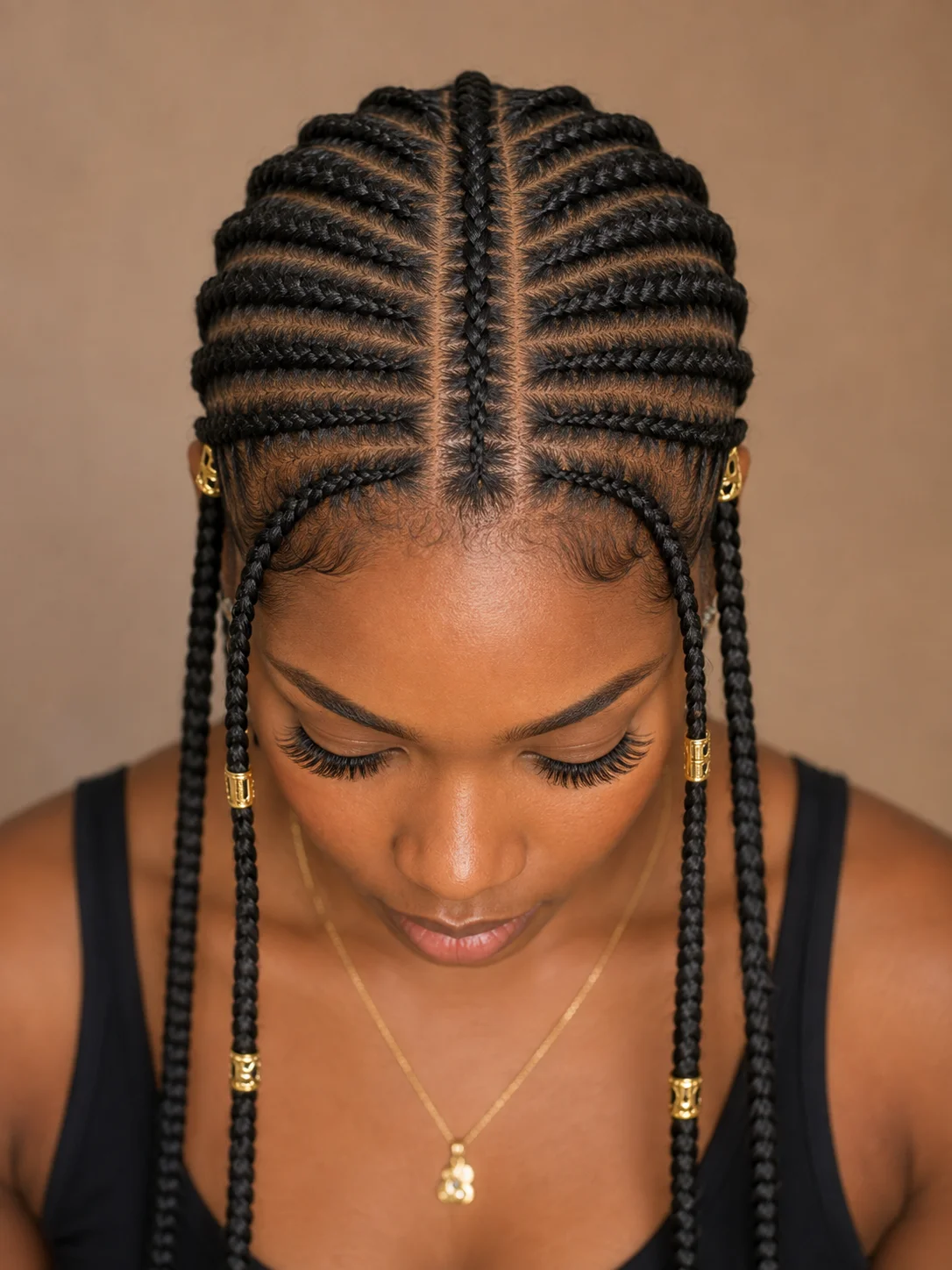
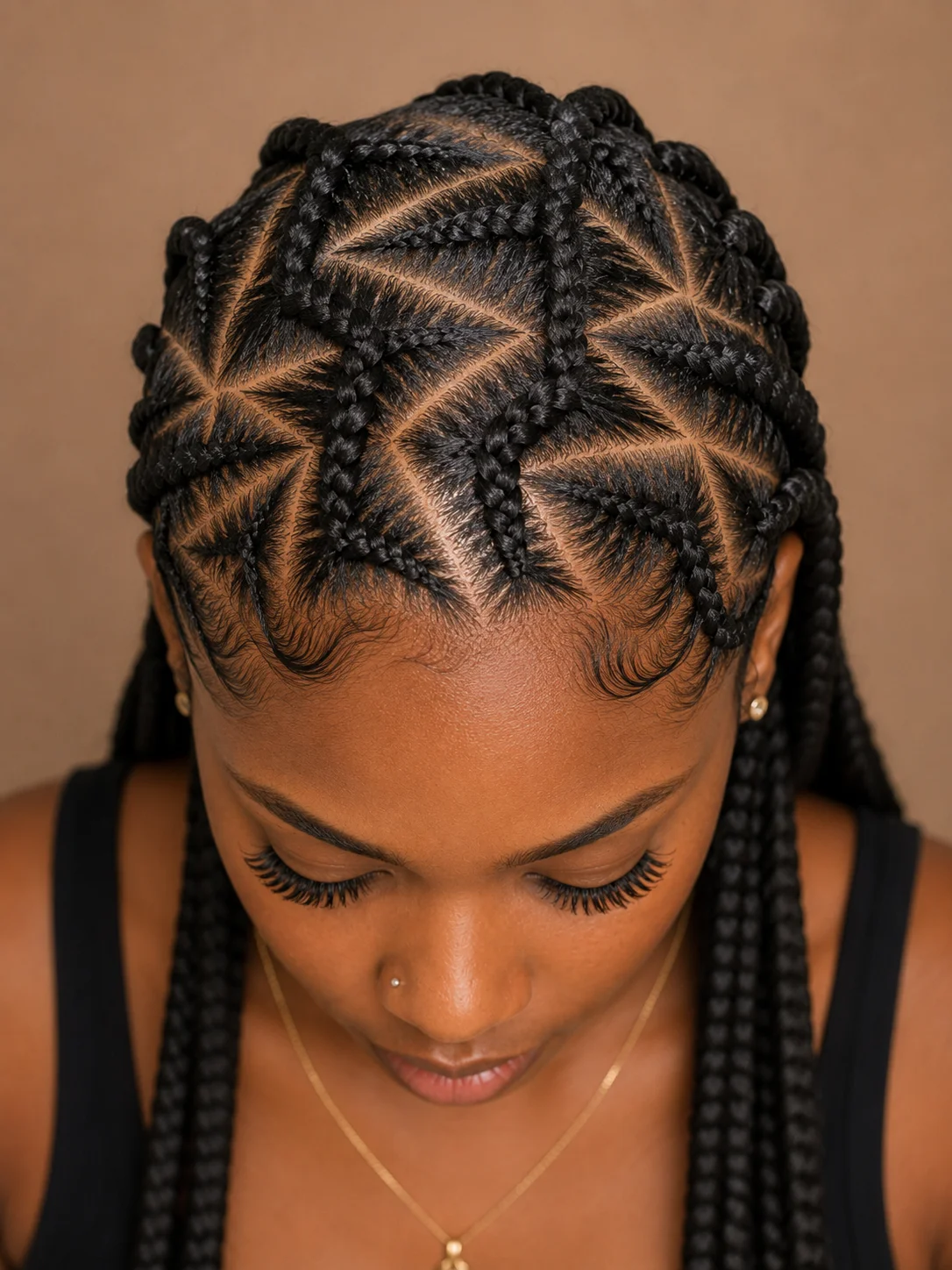
Top-down view of Fulani braids showing the single center cornrow with symmetrical face-framing braids and gold cuffs
Fulani Pattern — Symmetrical Center Cornrow
Top-down view of tribal braids showing a bold geometric star-shaped cornrow pattern across the scalp
Tribal Pattern — Geometric Star Design

Fulani Braids

  • One specific pattern within tribal braids
  • Center cornrow + symmetrical face-framing
  • Consistent, recognizable look every time
  • Traditional adornments: beads, cuffs, shells
  • Named for the Fulani people specifically

Tribal Braids

  • Broad category of geometric cornrow patterns
  • Zigzags, stars, triangles — highly varied designs
  • Every install can look completely different
  • Usually paired with thick jumbo braids or twists
  • Umbrella term covering many West African patterns

Fulani Braids vs Tribal Braids — Full Comparison

CategoryFulani BraidsTribal Braids (General)
RelationshipA specific styleThe broader category Fulani belongs to
PatternFixed — center cornrow + face-framingHighly varied — zigzags, stars, triangles
PredictabilityConsistent every installDifferent every time, stylist-dependent
Longevity4–8 weeks6–10 weeks (thicker sections)
Salon Cost$80–$300$100–$350+
AdornmentsTraditional (beads, cuffs, shells)Varies by design, often minimal
Cultural OriginFulani people, West AfricaMultiple West African braiding traditions

Which Lasts Longer — Fulani vs Tribal Braids?

Tribal braids with thick jumbo sections often hold up slightly longer than Fulani braids — 6 to 10 weeks compared to 4 to 8 weeks — simply because fewer, thicker braids place less repeated tension on any single section of hair. Fulani's face-framing braids get more daily handling than a jumbo tribal install, which speeds up frizzing at those points. That said, tribal braids with finer, more intricate cornrow patterns behave more like Fulani braids in terms of lifespan, since the deciding factor is really braid thickness and how much of the pattern gets touched daily, not the category itself.
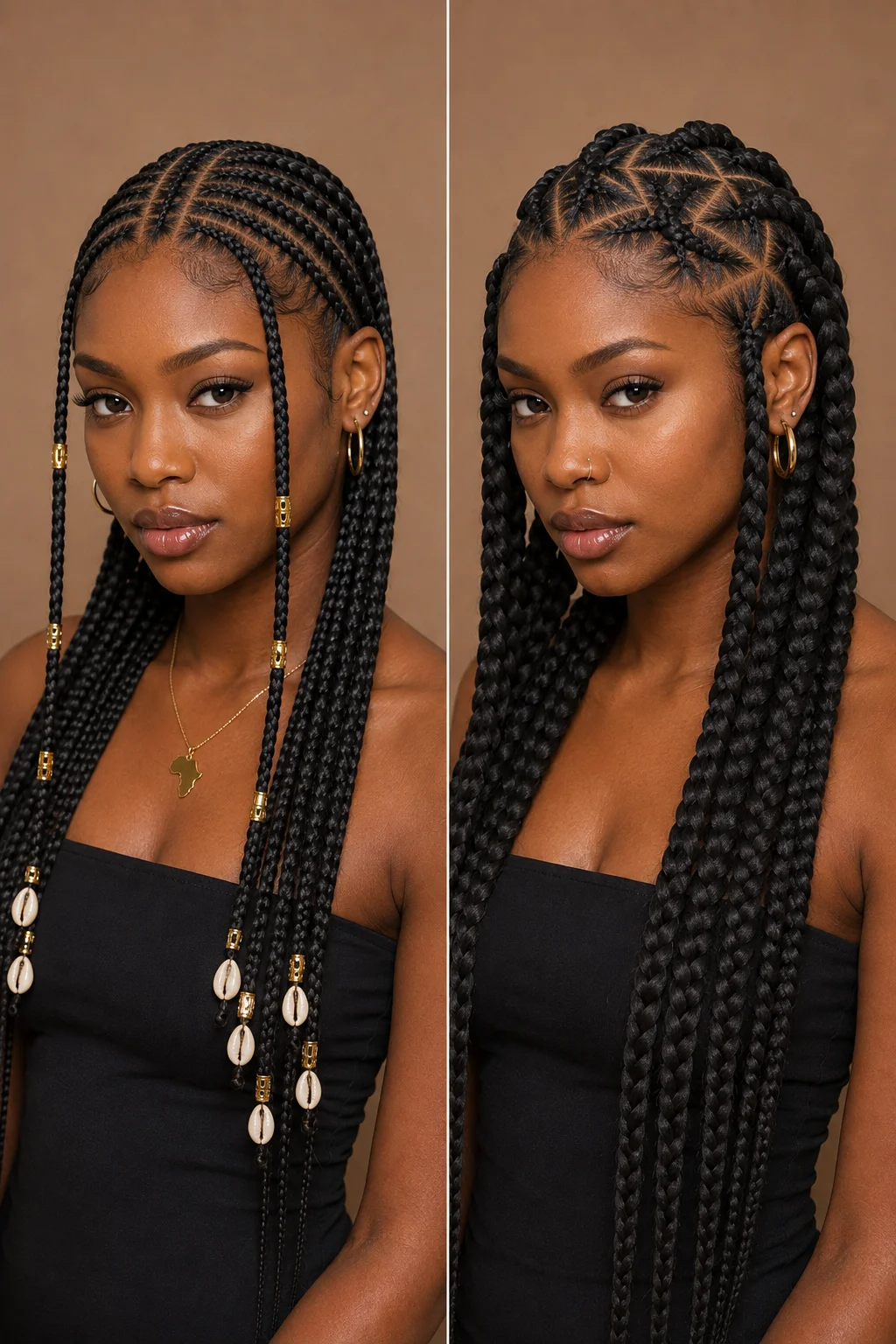
Full-length comparison of Fulani braids with beads and cowrie shells versus tribal braids with geometric parting and jumbo braids
Full-Length Look — Fulani vs Tribal Pattern
Tribal braids geometric cornrow pattern close-up
Tribal Braids — Bold Geometric Design
Quick Gut Check

Want a classic, recognizable pattern that looks the same every time you get it done? Fulani braids. Want to work with your stylist to design a one-of-a-kind geometric look? Ask for tribal braids and bring inspiration photos — every install is different.

Choosing Between Fulani and Tribal Braids

Choose Fulani Braids If You…

  • Want a consistent, recognizable pattern
  • Are drawn to traditional adornments — beads, cuffs
  • Prefer a symmetrical, face-framing design
  • Want to know exactly what you'll get before booking

Choose Tribal Braids If You…

  • Want a bold, statement-making geometric design
  • Enjoy collaborating with your stylist on a custom look
  • Prefer thicker jumbo sections for longer wear
  • Like the idea of a different pattern every install

If you're torn, remember Fulani braids will always give you a reliable, well-documented result — every stylist knows the pattern. Tribal braids give you more creative range but depend heavily on your stylist's skill with intricate parting, so review their portfolio closely before booking a custom geometric design.

FAQ

Frequently Asked Questions


Is Fulani braids the same as tribal braids? +
No, but they are related. Tribal braids is a broad category of braid styles with intricate cornrow patterns and cultural roots, and Fulani braids are one specific style within that category, defined by a center cornrow and face-framing braids.
What makes a braid style count as tribal braids? +
Tribal braids typically feature bold, intricate cornrow patterns, such as geometric shapes, zigzags, or stars, usually paired with thick box braids or twists for the remaining length.
Which lasts longer, Fulani braids or tribal braids? +
Tribal braids with thick jumbo sections often last slightly longer than Fulani braids, 6 to 10 weeks compared to 4 to 8 weeks, since fewer, thicker braids place less repeated tension on any single section.
Are tribal braids more expensive than Fulani braids? +
Tribal braids can cost more due to the intricate cornrow patterns requiring extra time and skill, though the price varies widely depending on the complexity of the design chosen.
AJ

Amara Johnson

Licensed Braiding Specialist — 8 Years Experience

Amara has specialized in protective styling and natural hair care since 2018. All guides are independently researched and written from hands-on braiding experience.

Independent informational website — not affiliated with any salon or brand.  |  Disclaimer  |  Privacy Policy  |  Contact