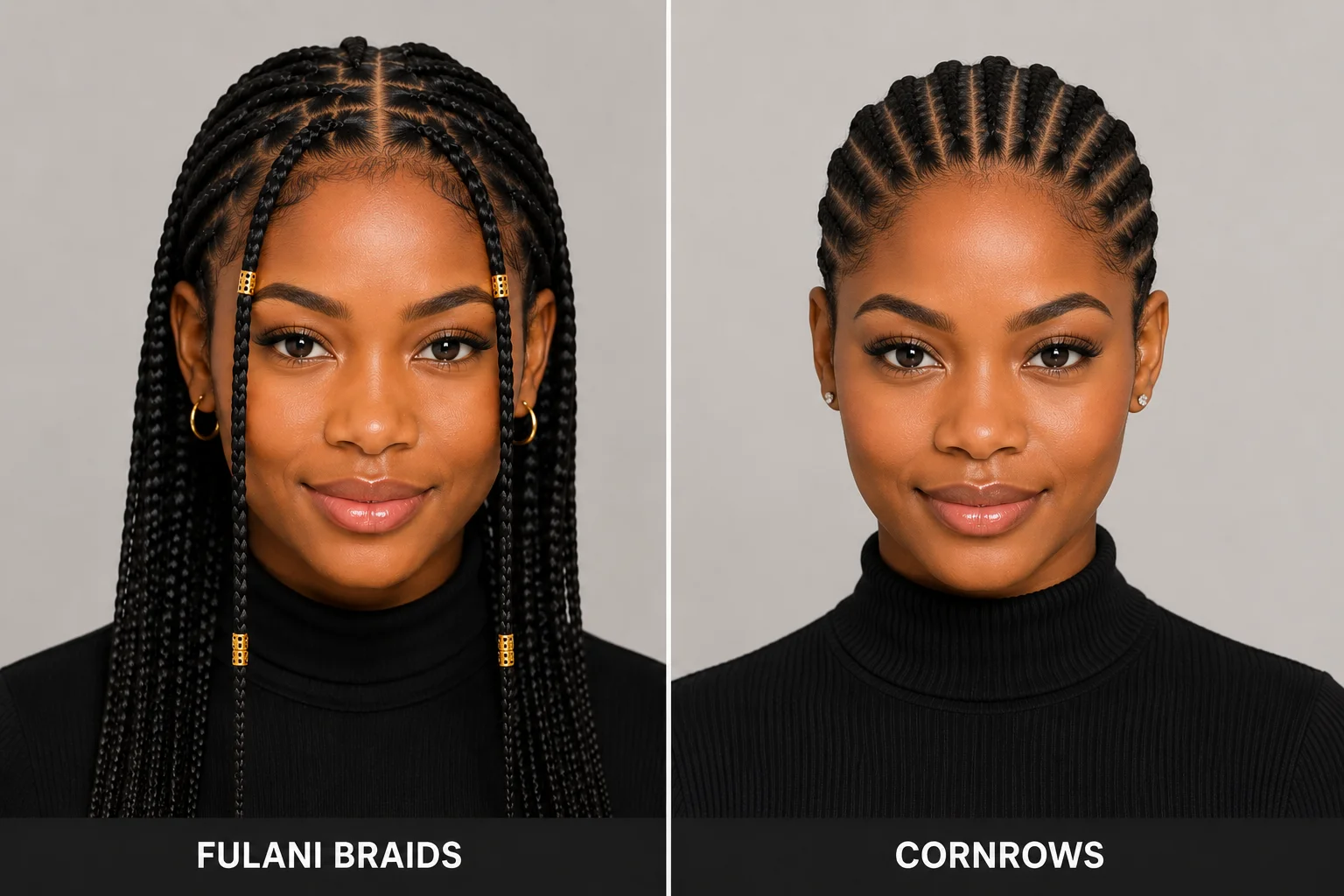
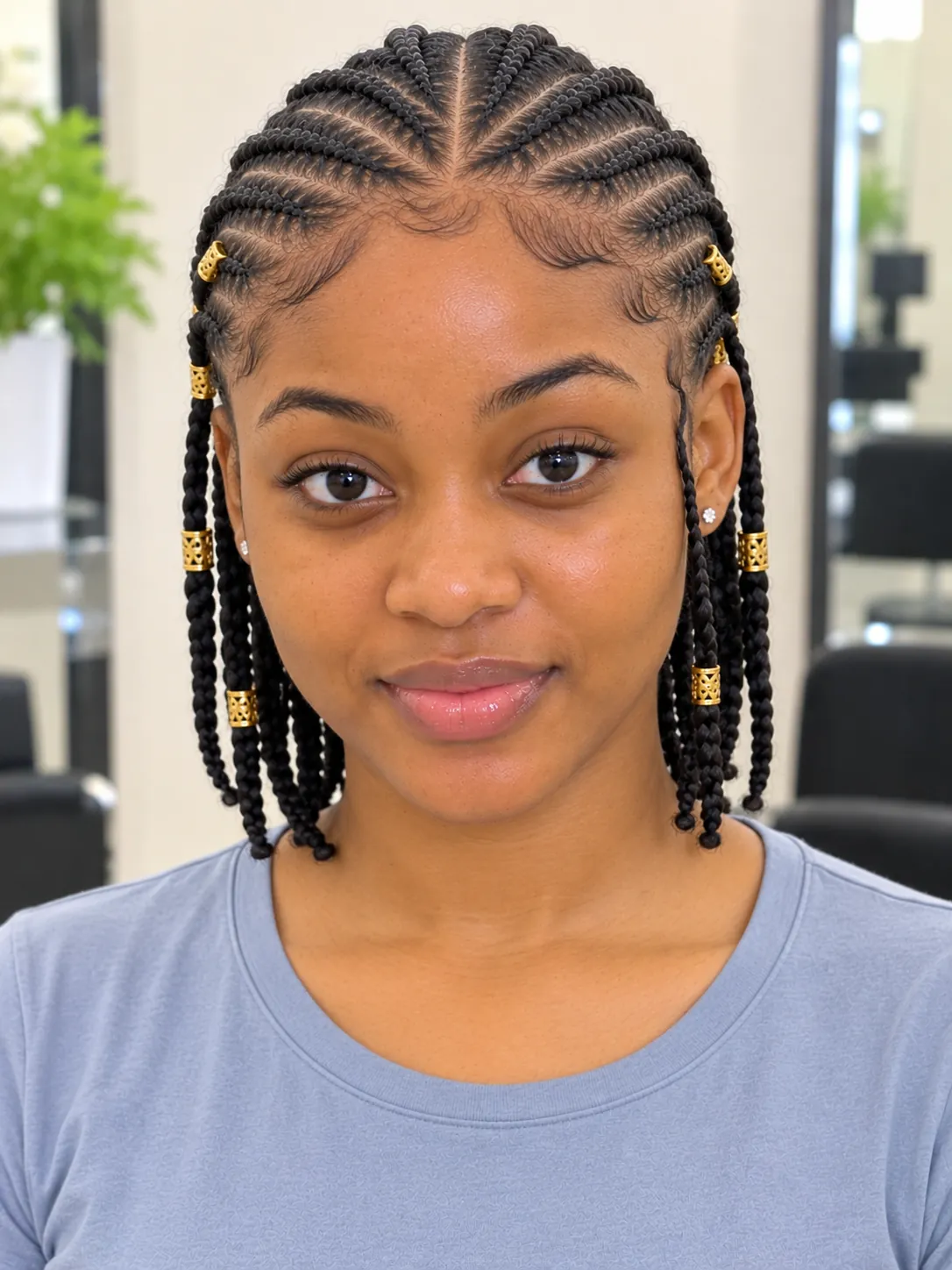
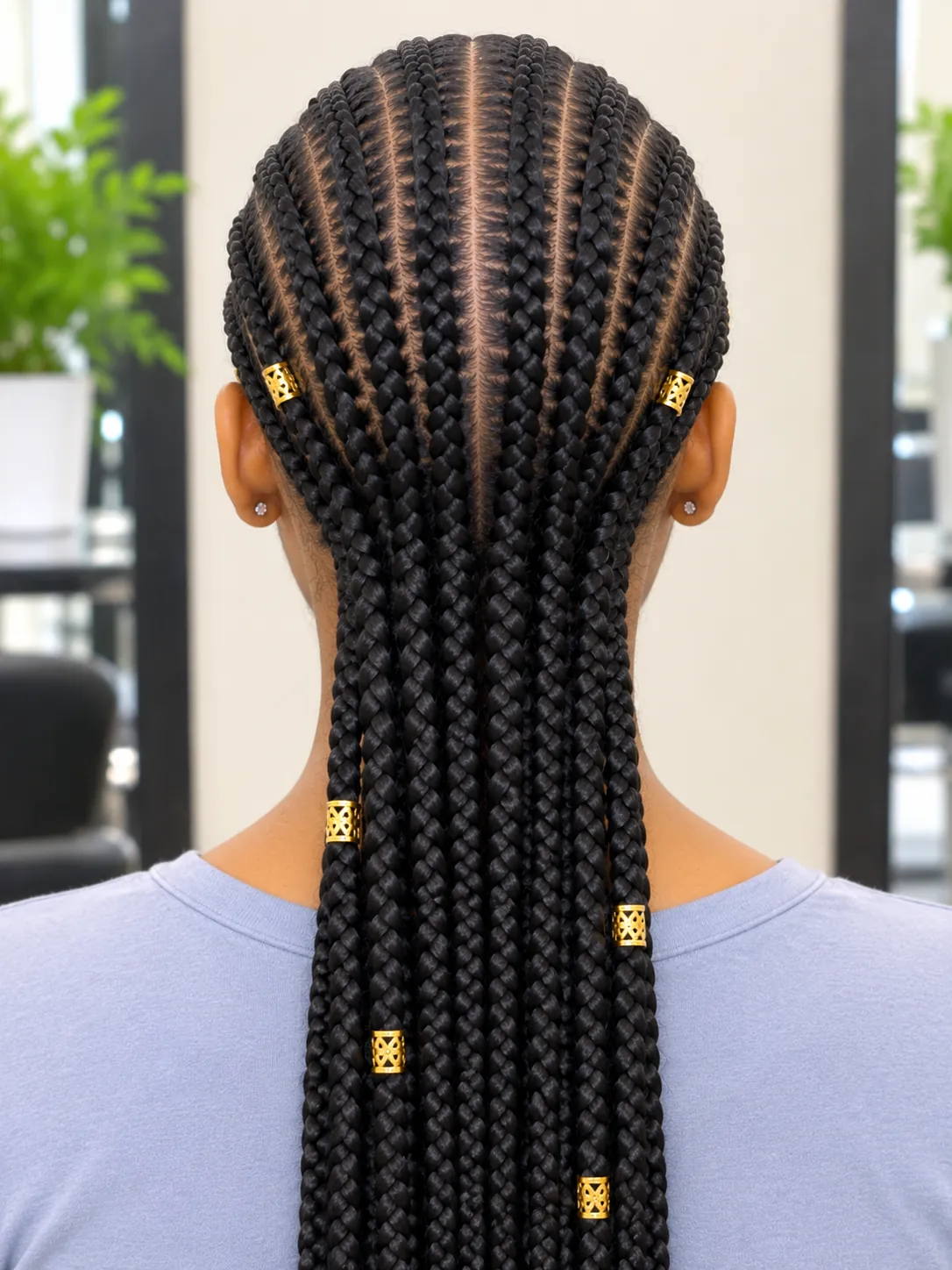
Quick answer: Cornrows lie completely flat on the scalp with no hanging length and last 2 to 6 weeks. Fulani braids start as cornrows, then turn into hanging braids with beads, and last 4 to 8 weeks with extensions.
The Core Difference
Fulani braids vs cornrows gets mixed up a lot, because Fulani braids actually use cornrowing inside the style.
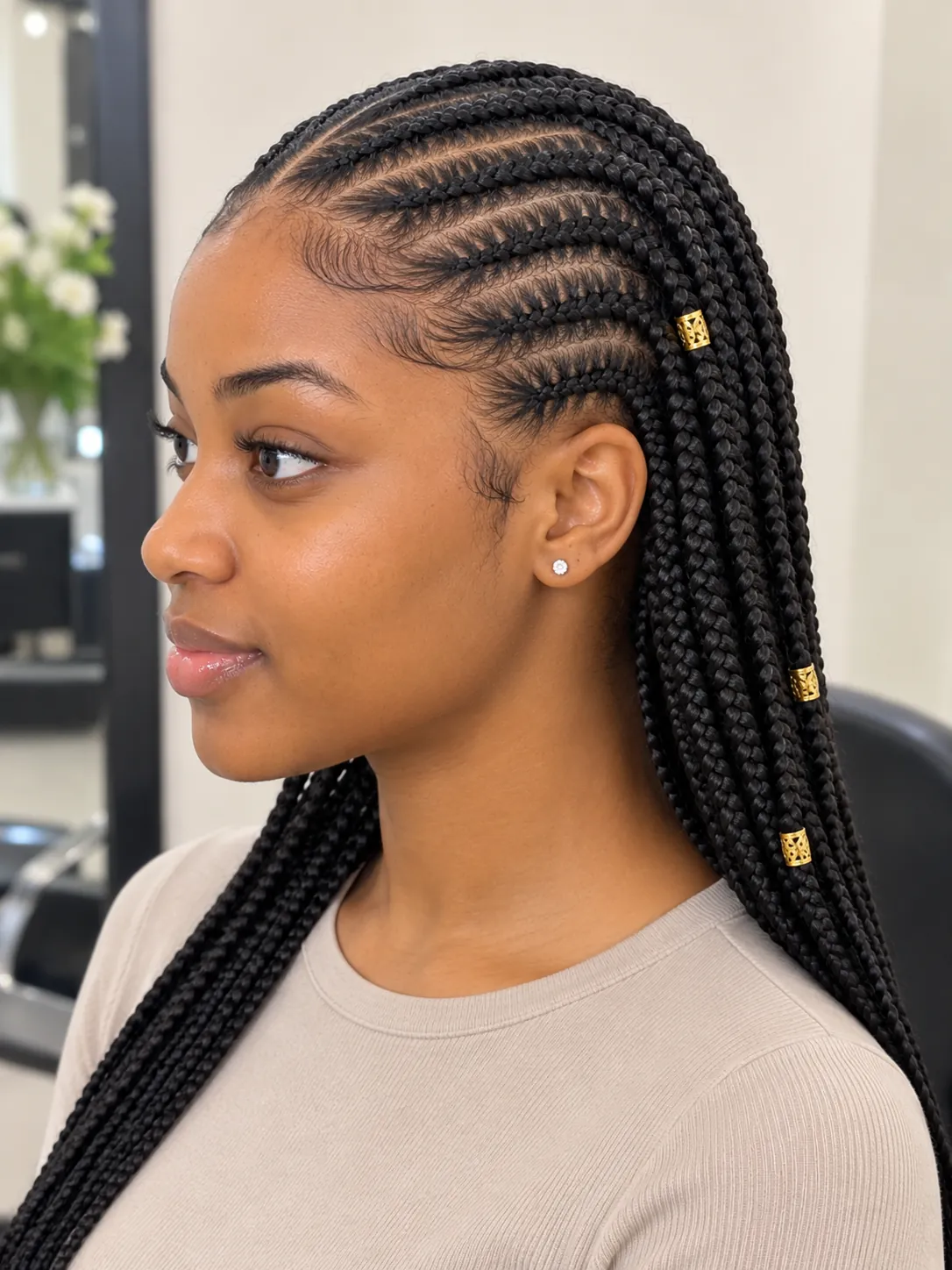
Cornrows stay flat from root to end. Fulani braids cornrow the center and the sides, then switch to individual braids that hang past the scalp.
So cornrows are the technique, and Fulani braids are a full style built on it. You can have cornrows without Fulani, but never Fulani without cornrows.
Fulani Braids
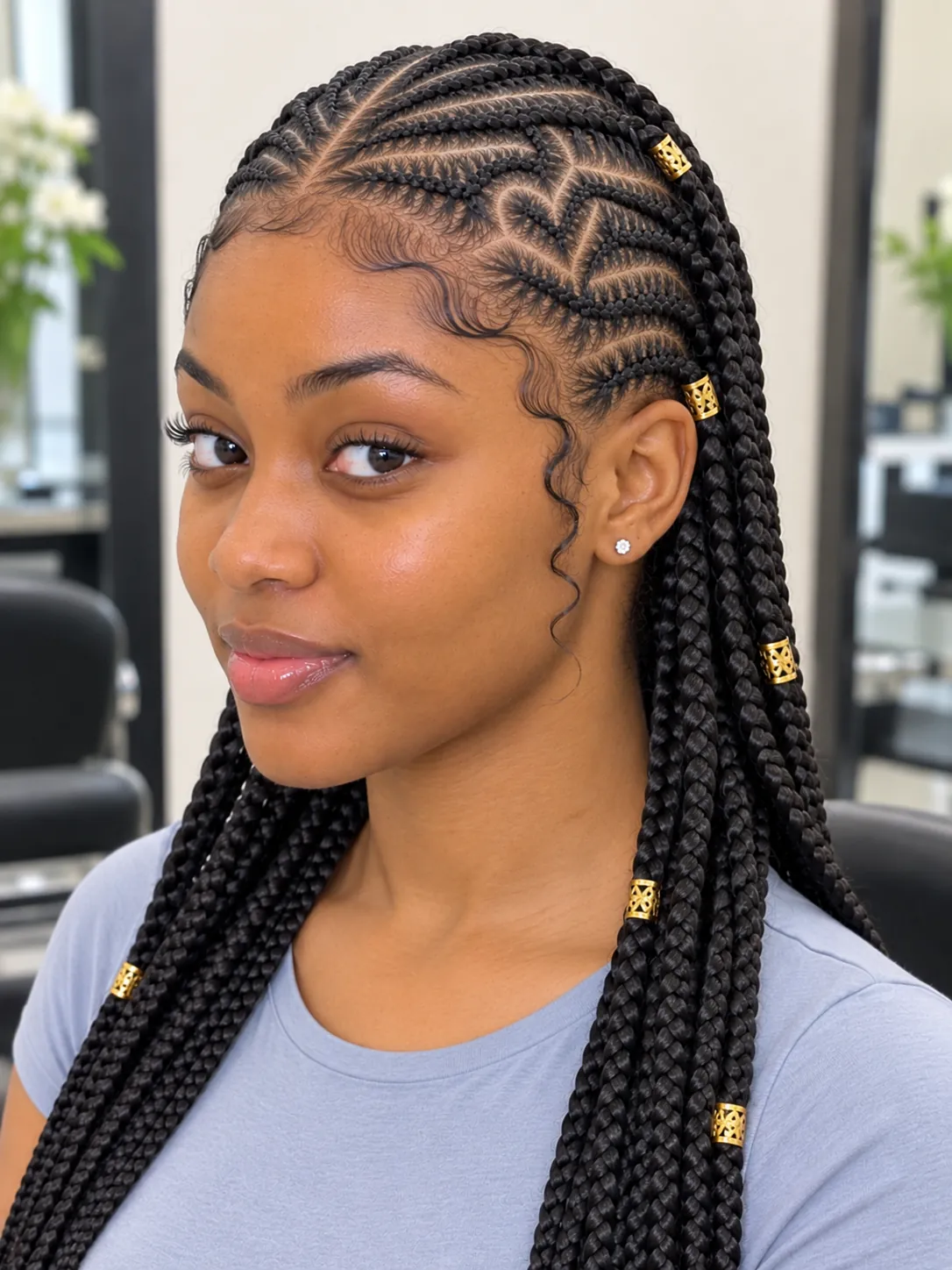
Center cornrow plus hanging individual braids
Extension hair adds length past the scalp
Face-framing braids hang beside the face
Beads, cuffs and cowrie shells as adornments
Plenty of updo options
Lasts 4 to 8 weeks with extensions
Longer install, more visual impact
Cornrows
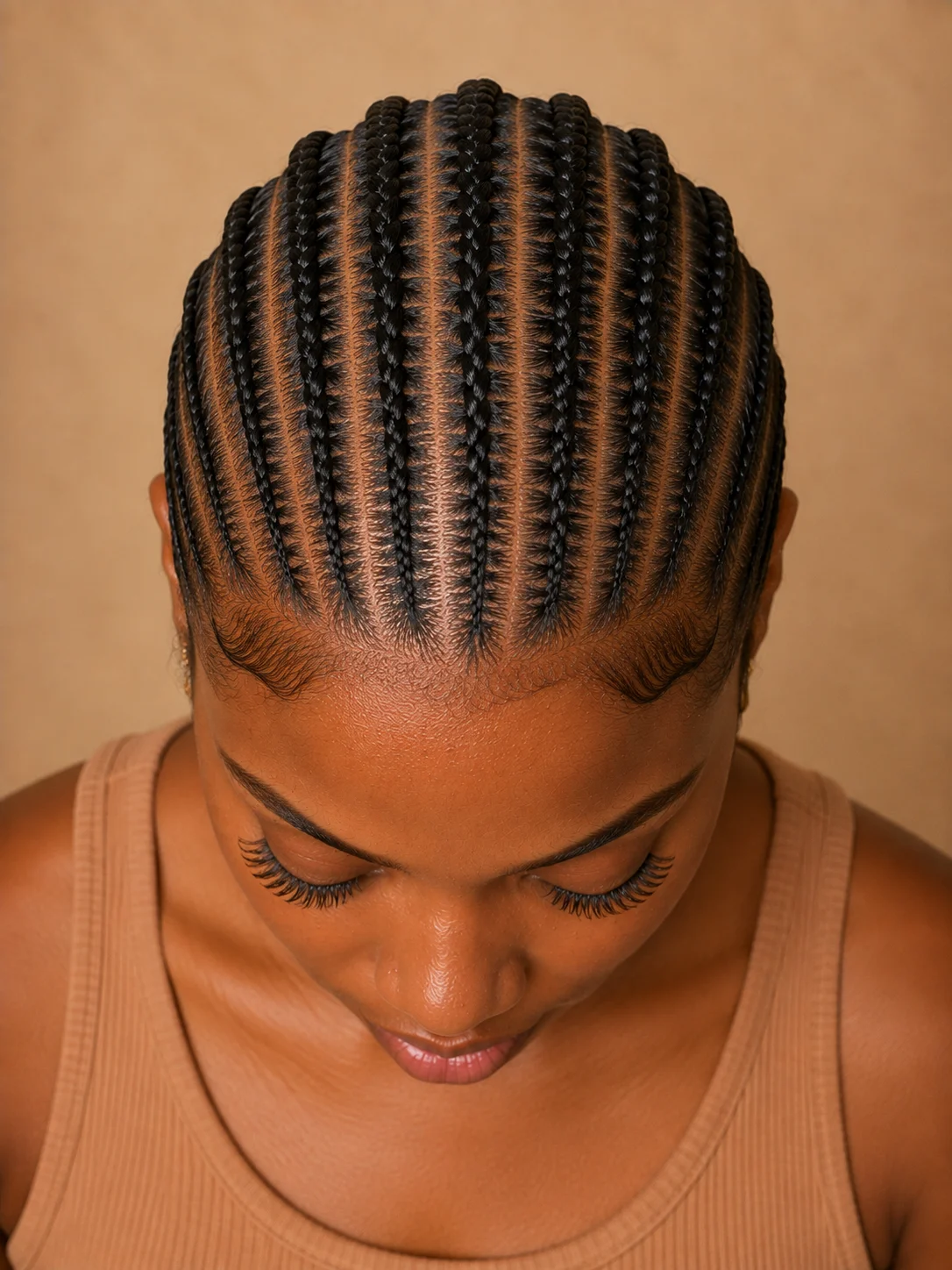
Lie completely flat on the scalp
Often done on natural hair, no extensions
No hanging length, the style ends at the scalp
Rarely adorned, sometimes a few beads
Style is fixed once installed
Lasts 2 to 6 weeks on natural hair
Quicker install, clean close-to-scalp look
What Cornrows Look Like
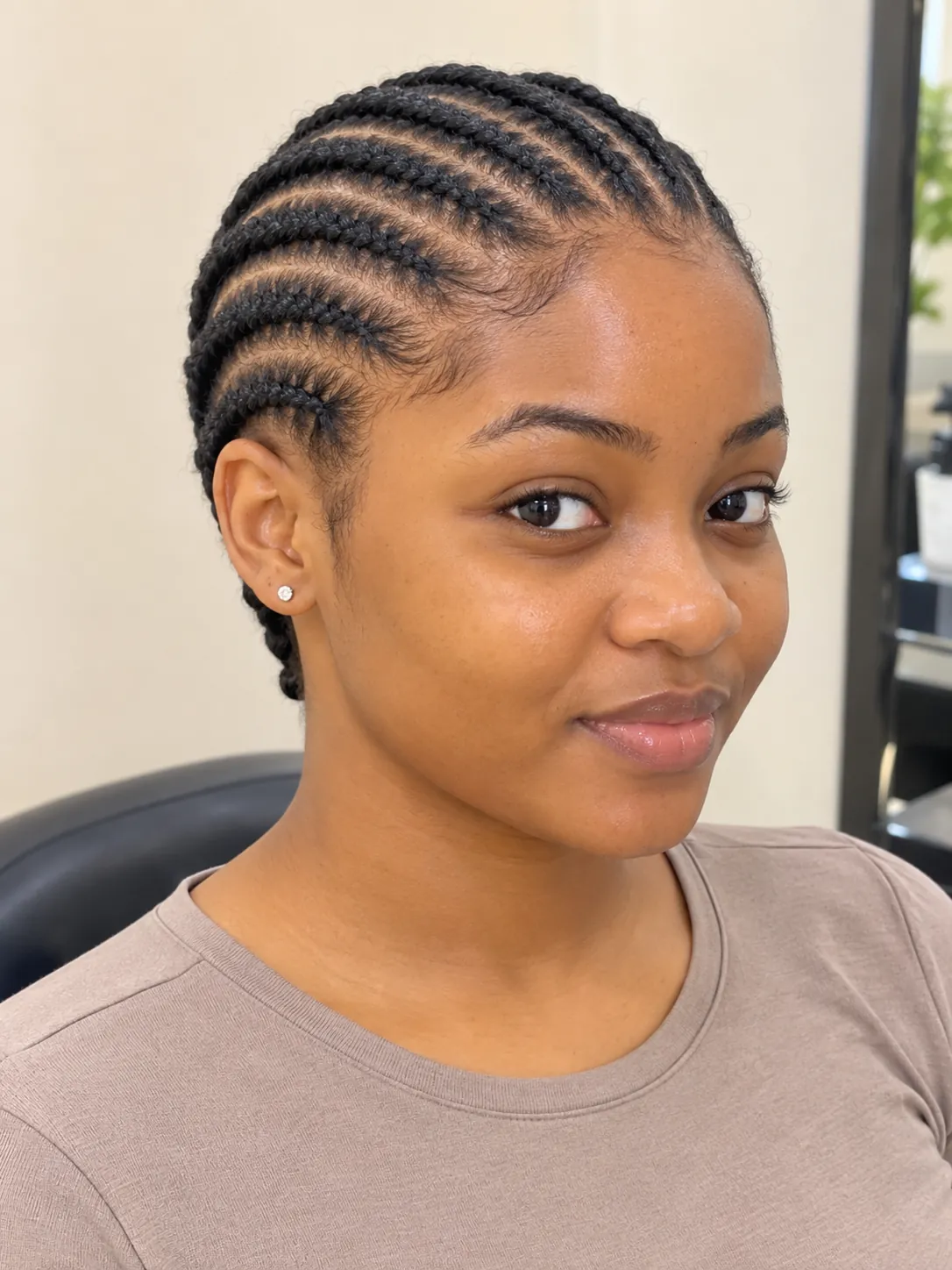
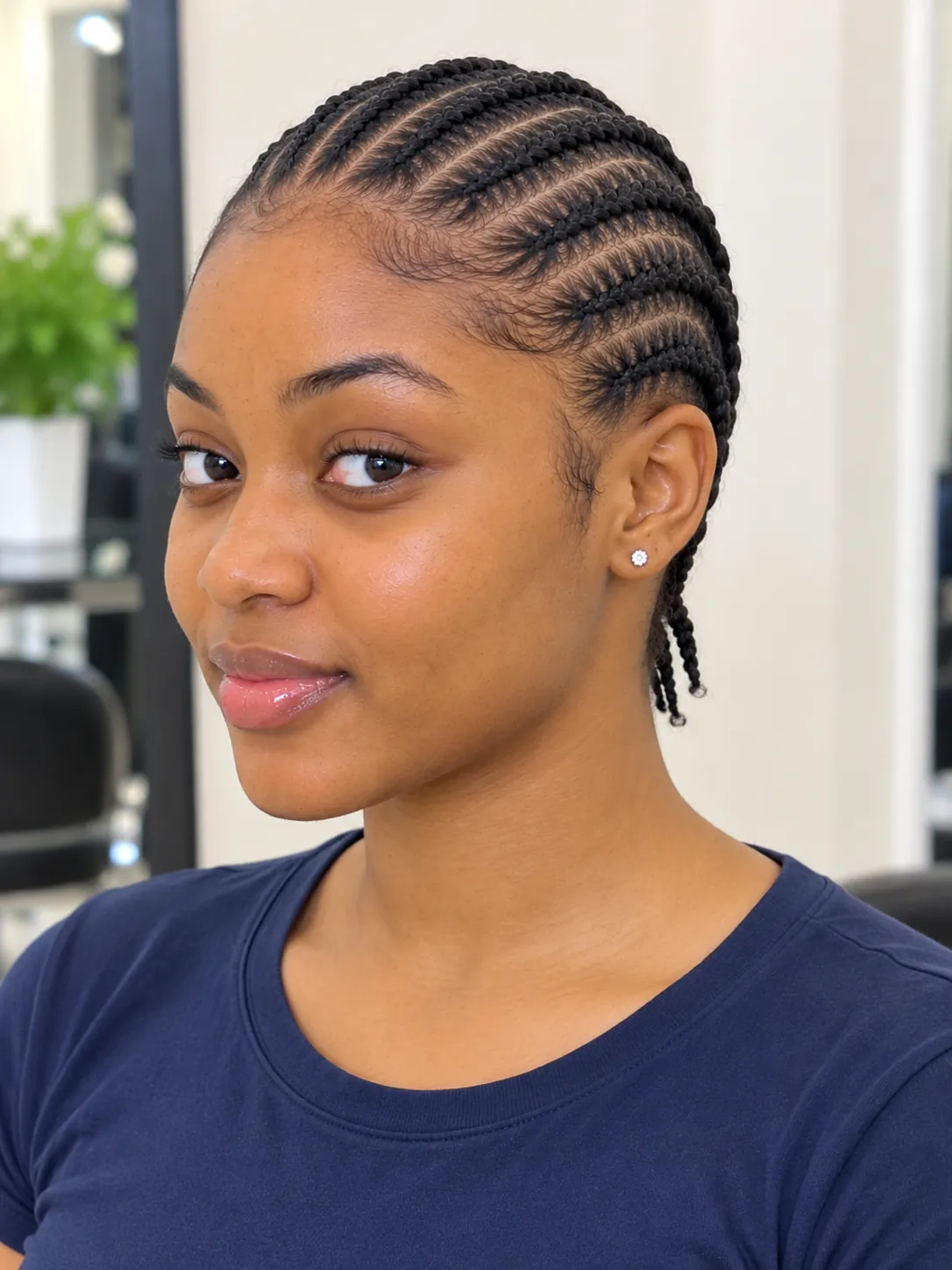
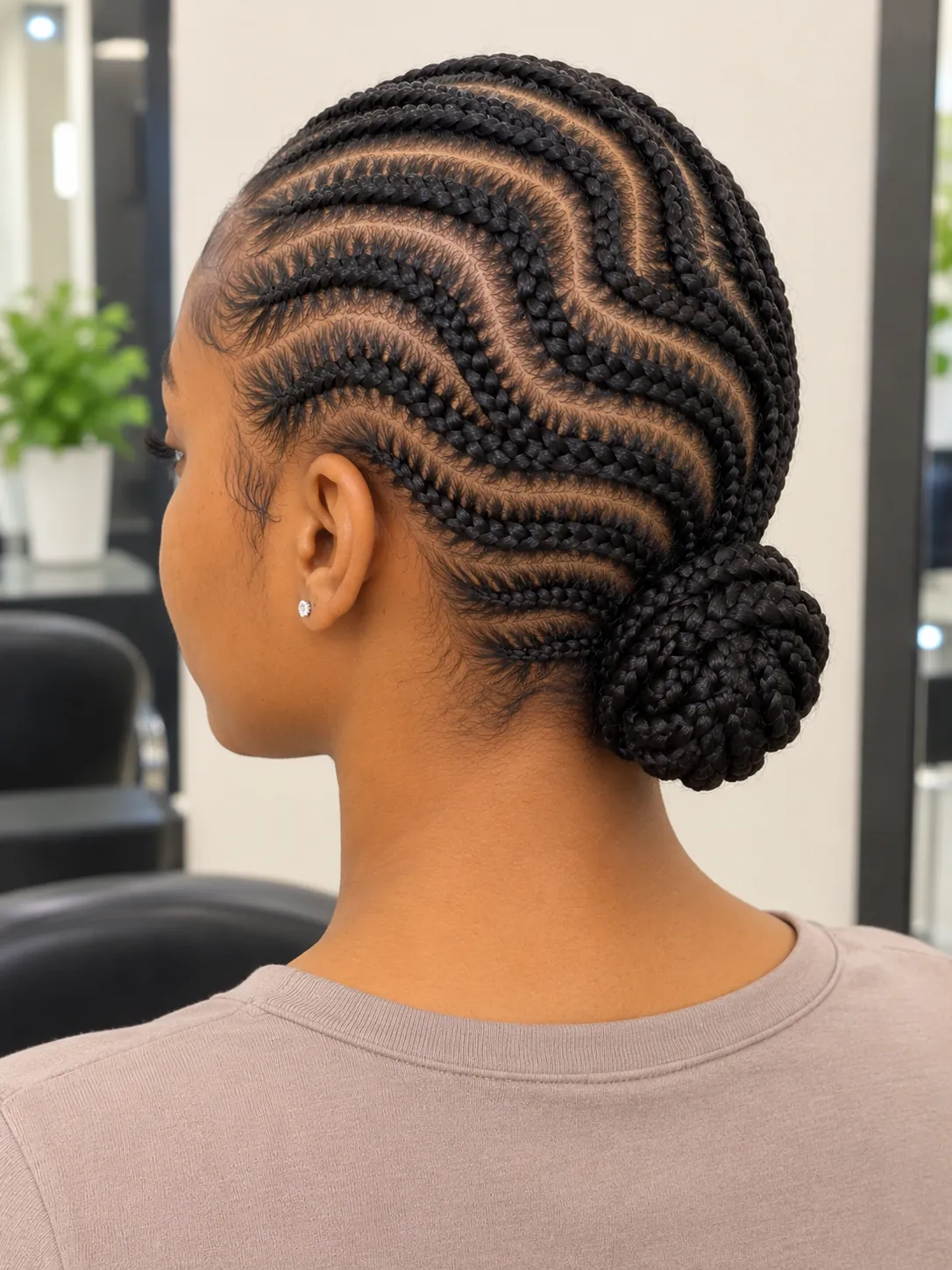
Straight back or in a pattern, cornrows always stay flat.
Straight back · natural hairShort hair · small rows, no extensionsFreestyle · curves into a low bun
Cornrows can run in any direction: straight back, curved, zigzag or swept to one side. Fulani braids always keep the same layout, with a center cornrow and braids framing the face.
That fixed layout is the quickest way to tell the two apart in a photo.
What's the Difference Between Braids and Cornrows?
Braids hang free from the scalp, like box braids or knotless braids. Cornrows are braided flat onto the scalp in rows, so nothing hangs.
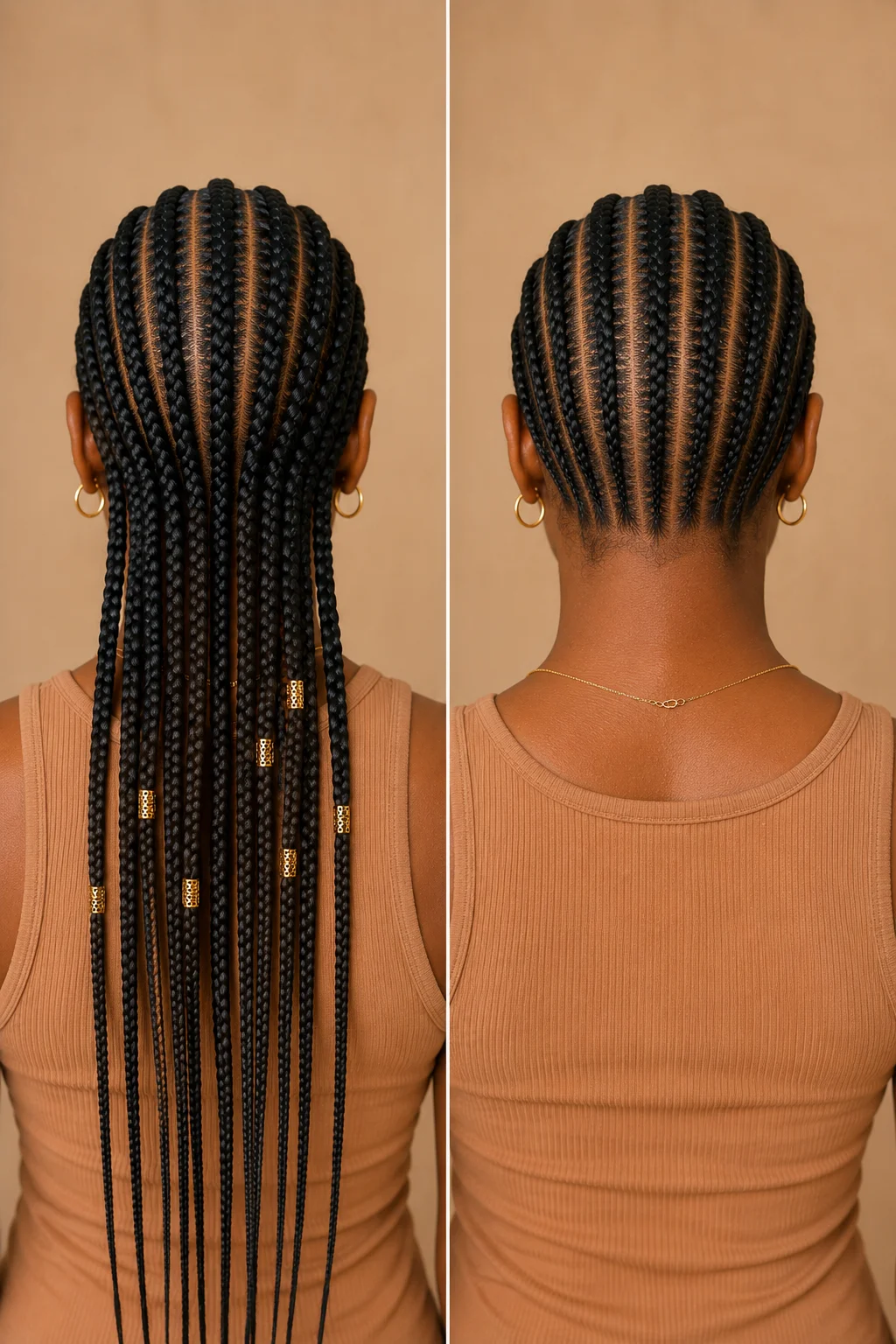
Fulani braids sit in between: cornrows on the scalp, braids hanging below.
Full Comparison
Category
Fulani Braids
Cornrows
Technique
Cornrow plus hanging individual braids
Flat cornrow only
Extensions
Almost always used
Optional, less common
Longevity
4 to 8 weeks
2 to 6 weeks
Install Time
4 to 8 hours
1 to 4 hours
Salon Cost
$100 to $350
$60 to $150
Styling Options
Many: updos, flip-over, half-up
Limited, fixed at install
Hair Length Needed
3+ inches at the root
2+ inches
Best For
Statement protective style
Low-maintenance flat style
Are Fulani Braids a Type of Cornrow?
Partly. The center braid and the start of each side braid are cornrowed flat.
The cornrows run flat to the crown, then hang as braids.
But as a finished style, Fulani braids are not cornrows. The hanging length, movement and beads give a completely different look.
Simple test: flat braids with nothing hanging means cornrows. A center pattern leading into hanging, beaded braids means Fulani.
Can You Convert Cornrows Into Fulani Braids?
Often, yes. If your cornrows already follow a center-part layout, a stylist can add extension hair to the center and side rows to create hanging length.
If your rows run in another direction, you'll need a fresh install.
Going the other way is easier. Take out the hanging sections and the flat cornrows underneath are already there.
Day-to-Day Maintenance
What each style asks of you week to week:
Fulani Braids Upkeep
Moisturize the scalp every 2 to 3 days with a light oil
Satin scarf or bonnet nightly to protect the length
Re-lay edges most mornings
Root touch-up around week 4 to 5 if extending wear
Cornrows Upkeep
Moisturize the scalp every 2 to 3 days, same as Fulani
Satin scarf still helps, but matters less
Very little edge styling needed
New growth shows sooner, usually by week 2 to 3
Cornrows need less daily attention but need a refresh sooner. Fulani braids take a few more minutes a day but keep their finished look longer.
Which Lasts Longer: Fulani Braids or Cornrows?
Usually Fulani braids. They last 4 to 8 weeks with extensions, against 2 to 6 weeks for cornrows on natural hair.
The extension hair holds the braid shape, while natural-hair cornrows start to frizz at the root much sooner.
Which Should You Choose?
Choose Fulani Braids If You…
Want length and movement
Want beads and adornments in the look
Need a longer-lasting protective style
Want updo options after install
Don't mind a longer install session
Choose Cornrows If You…
Prefer a flat, close-to-scalp style
Want a faster, cheaper install
Play sports or want minimal movement
Want the scalp pattern to be the focus
Prefer no extension weight
Tip: Think about your week, not just the look. Cornrows suit very active days with lots of sweat. Fulani braids give more styling options but need a little more care to keep the edges and face-framing braids neat.
What is the difference between Fulani braids and cornrows? +
Fulani braids combine flat cornrows at the scalp with individual braids that hang past the scalp. Traditional cornrows lie entirely flat with no hanging length. Fulani braids also follow a set center-part and face-framing pattern, while cornrows can run in any direction.
Are Fulani braids a type of cornrow? +
Fulani braids use cornrowing as a technique, since the center section is cornrowed flat. But they are not cornrows in the traditional sense, because they include hanging individual braids.
Which lasts longer, Fulani braids or cornrows? +
Fulani braids with extensions last 4 to 8 weeks, while cornrows on natural hair last 2 to 6 weeks. The extension hair holds the braid structure much longer.
Are Fulani braids or cornrows better for hair growth? +
Both are protective when installed at the right tension. Very tight cornrows can cause more traction stress than properly tensioned Fulani braids. Both help length retention by cutting down daily handling.
Can cornrows be converted into Fulani braids? +
Often yes. A stylist can add extension hair to existing center-part cornrows to create hanging length, as long as the original cornrows already follow a center-part layout.
Which needs more daily maintenance, Fulani braids or cornrows? +
Fulani braids need a few more minutes a day for edges and nightly protection of the hanging length, but they hold their look longer. Cornrows need less daily attention but show new growth sooner, usually by week 2 to 3.
Are straight backs and cornrows the same? +
Yes, straight backs are cornrows. The name just describes the direction: every row runs straight back from the hairline to the nape. Cornrows can also curve, zigzag or sweep to one side.
Where do Fulani braids come from? +
Fulani braids are named after the Fulani people, a mostly pastoral ethnic group spread across West Africa and the Sahel. Cornrowing itself is practiced across many African cultures and is much older and broader than any one style. More in our Fulani braids history guide.
Last checked: November 2026
AJ
Amara Johnson
Licensed Braiding Specialist, 8 Years Experience
Amara has specialized in protective styling and natural hair care since 2018. All guides are independently researched and written from hands-on braiding experience.