
How to take down Fulani braids without breakage — the right tools, the correct order, and how to care for your natural hair immediately after removal.
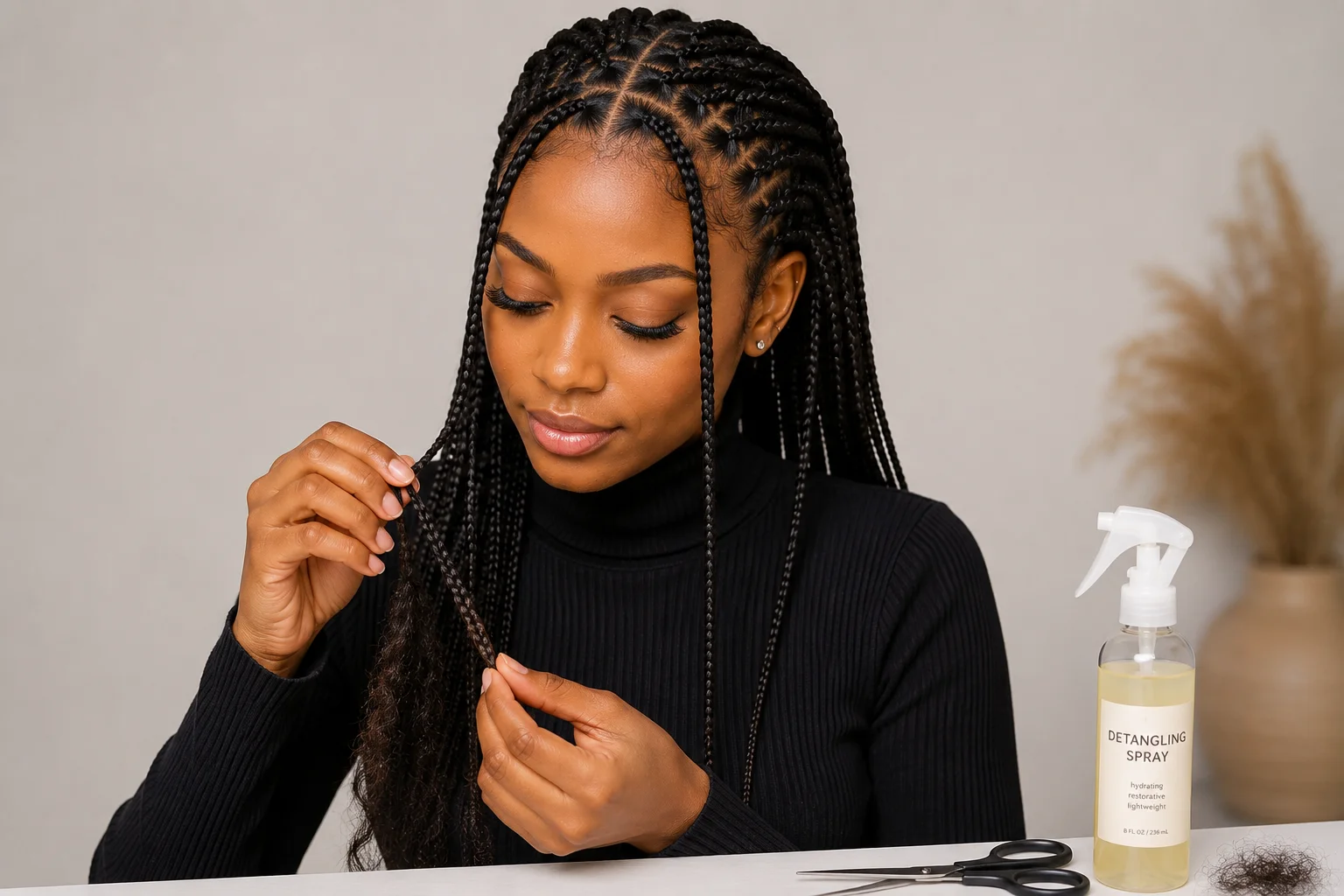
Knowing how to take down Fulani braids correctly is just as important as the install — the takedown process is when the most breakage occurs for most people, and almost all of that breakage is preventable with the right technique. The two most common mistakes are rushing the process and using a comb on tangled natural hair before it has been properly detangled by hand first. Both cause significant mechanical breakage at the point where natural hair has been growing inside the braid for weeks.
How to take down Fulani braids safely starts with patience and the right supplies. Set aside enough time to do the process without rushing — attempting to speed through a takedown leads to pulling on tangled sections that should be gently eased apart. For a standard medium Fulani braid install, plan for 1.5 to 2 hours of uninterrupted takedown time.
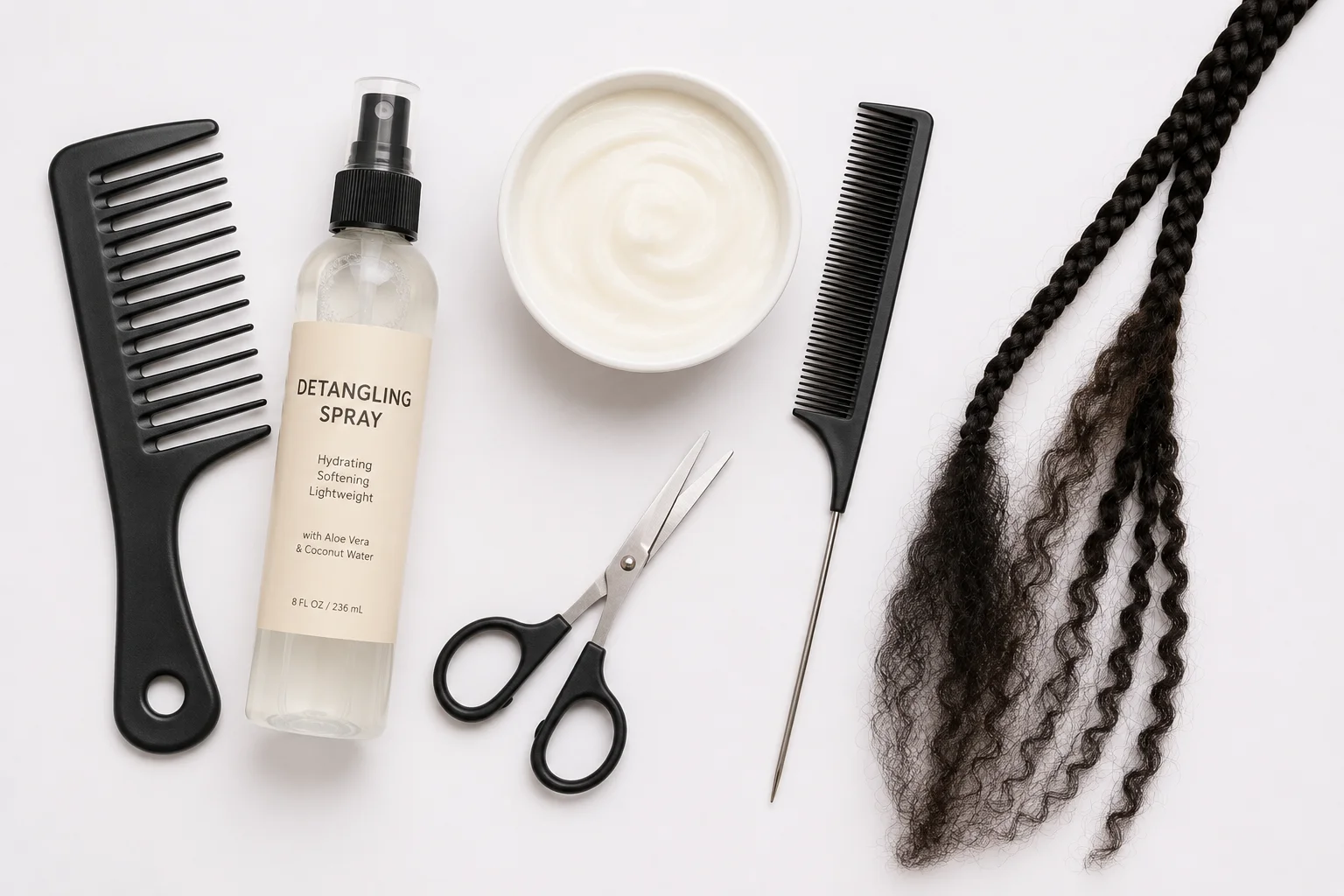
Used to cut the extension hair below the natural hair endpoint before unraveling — the single most time-saving step in the whole process.
Applied to each section as it is unraveled to soften the natural hair and reduce friction during detangling.
Used only after finger detangling — never on tangled natural hair directly out of a braid.
Useful for separating the natural hair from the extension hair at the root, particularly where the braid knot has tightened.
Slide off or open all gold cuffs and thread out any beads or cowrie shells before cutting or unraveling. Trying to remove beads mid-unravel snags the natural hair and slows the whole process down significantly.
Hold each braid and identify where your natural hair ends — usually visible as a slight color or texture difference. Cut the extension hair about 2 inches below that point as a safety margin. This removes the bulk of the braid length and makes unraveling significantly faster.
Starting at the cut tip, gently untwist the braid upward toward the root using your fingers — never pull downward. Work slowly through any sections where shed hair has become matted inside the braid.
Spritz detangling spray onto each section as it is released from the braid. The moisture softens the natural hair immediately and makes finger detangling significantly easier before the hair dries out again.
Once the braid is fully unraveled, gently finger detangle the released section before moving to the next braid. Remove all shed hair by hand — this is the accumulated natural shedding from the entire wear period. Do not panic at the volume; it is normal.
Once a section is finger detangled, follow with a wide-tooth comb working from ends to roots. Never use a fine-tooth comb or brush on freshly released braid hair — the hair is fragile from weeks of being set in position and needs gentle, wide-spaced teeth.
Twist or clip each detangled section out of the way before moving to the next braid. Keeping finished sections separated prevents them from re-tangling with braids that are still being removed.
Wash the hair the same day or the day after how to take down Fulani braids is complete — do not leave the released natural hair in a loose state for multiple days without washing. The combination of product buildup, shed hair residue, and scalp oil from the wear period can cause further tangling and odor if left unwashed. Use a clarifying shampoo first to remove all buildup, then follow with a moisturizing shampoo and a deep conditioner left on for at least 30 minutes.
After how to take down Fulani braids and the post-takedown wash, give the natural hair at least one full week in loose styles — twists, bantu knots, or a simple wash-and-go — before reinstalling any braids. The scalp needs time to recover from weeks of tension, and the hair shaft needs moisture restoration before being braided again. Rushing back into a new install without a rest period is the most common cause of cumulative traction damage in people who wear Fulani braids regularly. See our maintenance guide for a full care routine between installs.
Independent informational website — not affiliated with any salon or brand. | Disclaimer | Privacy Policy | Contact